

The Washington Post has carried out one of the most severe newsroom layoffs in its long history, cutting more than 300 journalists and staff members and sending shockwaves through the global media industry. The scale of the move is stark, eliminating over a third of the newspaper’s editorial workforce and triggering deep concern about the future of international and local reporting at a time when trusted journalism is under unprecedented strain.
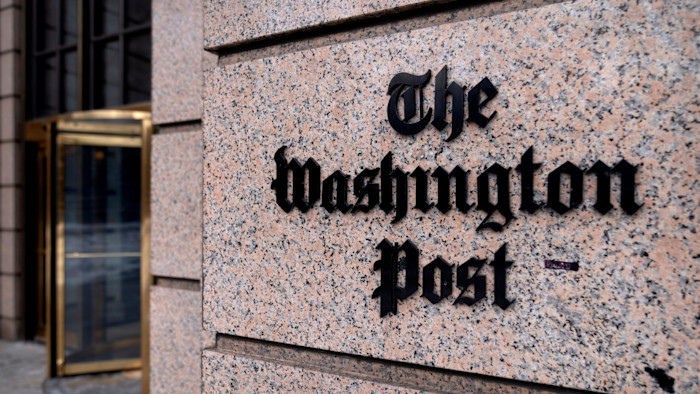
According to multiple sources within the organization, the layoffs have disproportionately impacted the Post’s foreign bureaus, local reporting teams, sports desk, and large portions of the business division. Entire international desks have reportedly been dismantled, dramatically shrinking a global presence that once defined the newspaper’s reputation for authoritative, on-the-ground reporting.
Among those laid off is senior international affairs columnist Ishaan Tharoor, a prominent voice on global politics and the son of Congress MP Shashi Tharoor. Ishaan Tharoor, who launched the widely followed WorldView column in 2017, confirmed his dismissal in a series of posts on X. Sharing an image of the Post’s iconic slogan, “Democracy Dies in Darkness,” he described the moment simply as “a bad day,” a message later reshared by his father.
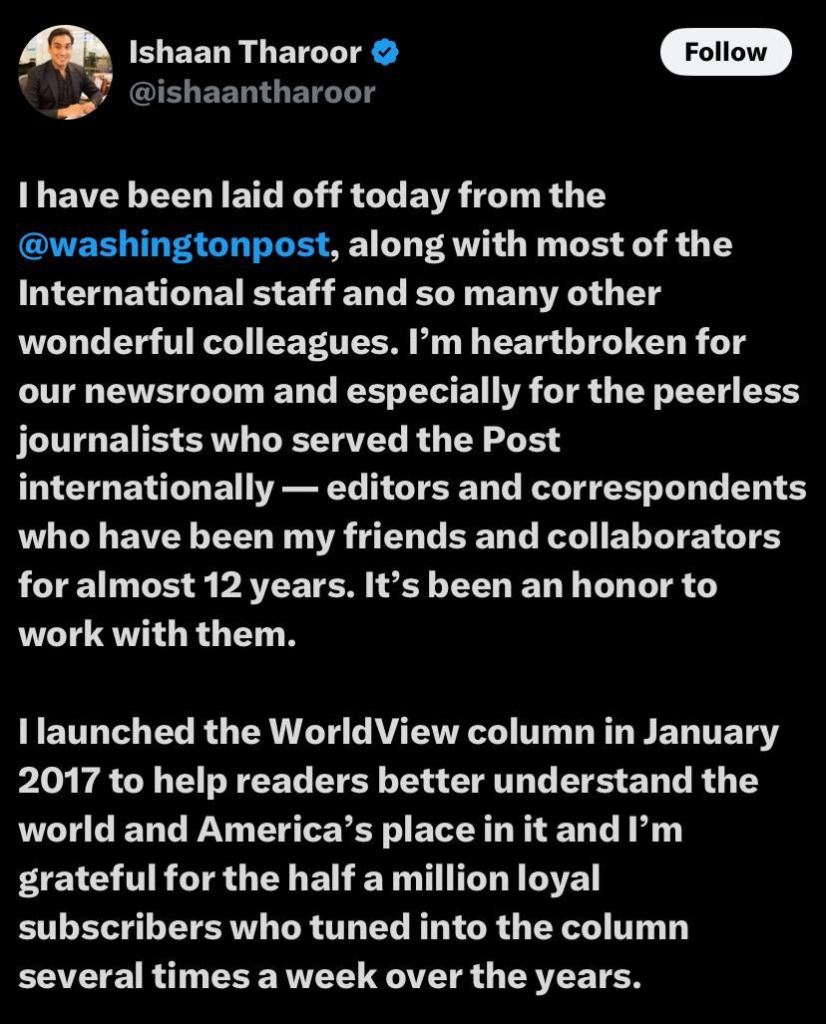
Calling the decision heartbreaking, Tharoor said he was laid off alongside much of the international reporting staff. He expressed anguish not only over his own exit but also over the loss of colleagues who, he said, delivered peerless journalism from around the world.
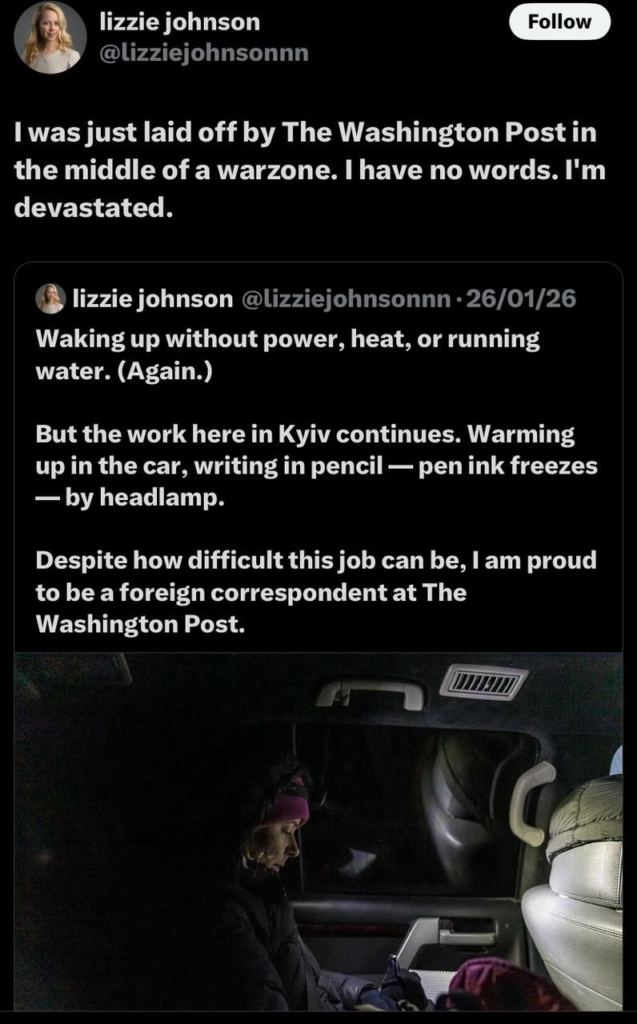
The layoffs have drawn sharp criticism after it emerged that reporters working in active conflict zones were also affected. Ukraine correspondent Lizzie Johnson revealed she was laid off while reporting from a warzone, saying she was devastated and struggling to process the decision. Similar accounts emerged from Europe and the Middle East, where entire bureaus were shut down overnight.
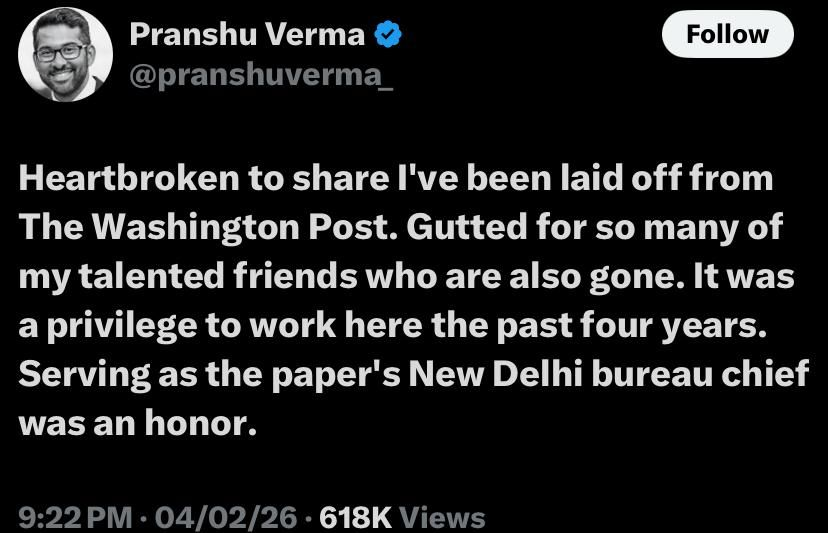
In Berlin, bureau chief Aaron Wiener confirmed that the Post’s operations there had been completely eliminated, calling it a dark day after what he described as the honor and adventure of a lifetime. From Cairo, journalist Claire Parker said the Middle East reporting roster had been entirely cut, a decision she said was difficult to comprehend given the region’s geopolitical importance.
Former Asia Editor Anna Fifield warned that readers would ultimately pay the price for these decisions. She said her heart broke not only for the journalists who lost their jobs but also for audiences who would now receive diminished global coverage.
The most scathing criticism came from former executive editor Marty Baron, who described the layoffs as among the darkest moments in the history of one of the world’s greatest news organizations. Baron warned that communities and global readers would now be deprived of ground-level, fact-based reporting that is needed more than ever in an era of misinformation and political polarization.
While acknowledging the severe financial pressures facing the media industry, Baron argued that the crisis had been exacerbated by ill-judged decisions at the highest levels. He directly criticized owner Jeff Bezos, accusing him of damaging reader trust and alienating both subscribers and senior journalists. Baron pointed to controversial editorial choices, including the decision to scrap a presidential endorsement ahead of the 2024 election and changes to the editorial page, calling them examples of self-inflicted brand destruction.
The layoffs mark a dramatic retreat from the Washington Post’s long-standing commitment to international reporting. Foreign correspondents, once the backbone of its award-winning journalism, appear to have been among the hardest hit, raising troubling questions about whether expensive, on-the-ground reporting can survive in the digital age.
For many observers, the cuts symbolize a broader crisis in global journalism, where financial pressures increasingly collide with the public’s need for reliable, independent reporting. Even as hopes remain that the reduced newsroom will continue to hold power to account, the voices of those departing echo grief, disbelief, and concern for readers left without the depth of coverage that once defined the Washington Post’s global reach.

In essence, the Washington Post’s mass layoffs represent not just a corporate restructuring but a pivotal moment for journalism itself, forcing the industry to confront difficult questions about sustainability, editorial priorities, and the true cost of shrinking the world’s newsrooms.