

The United States and India have announced a comprehensive framework for an Interim Trade Agreement, marking a major advancement in bilateral economic relations. The announcement, issued by the White House, signals renewed momentum in trade negotiations and reinforces both nations’ commitment to building a balanced, reciprocal, and outcome-driven trade partnership.
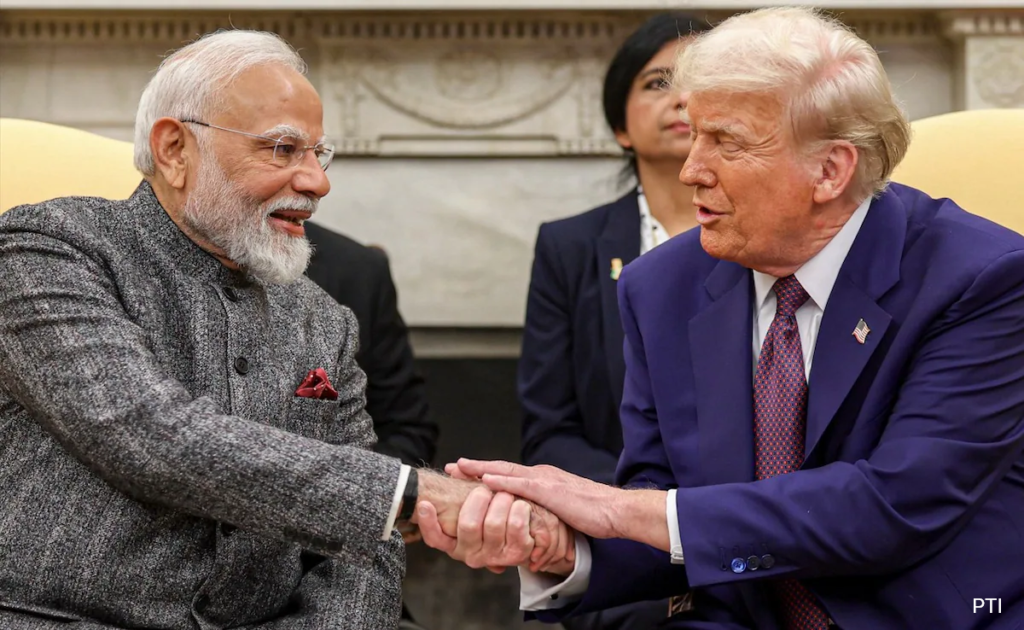
The framework stems from the broader U.S.–India Bilateral Trade Agreement negotiations launched on February 13, 2025, by U.S. President Donald J. Trump and Indian Prime Minister Narendra Modi. Officials from both countries described the interim arrangement as a critical stepping stone toward a full-scale trade pact that would expand market access and strengthen resilient supply chains.
Under the proposed framework, India has agreed to eliminate or significantly reduce tariffs on all U.S. industrial goods, along with a broad range of food and agricultural products. These include dried distillers’ grains, red sorghum used in animal feed, tree nuts, fresh and processed fruits, soybean oil, wine, spirits, and other agricultural exports. The move is expected to create new opportunities for U.S. farmers, food processors, and manufacturers seeking access to the Indian market.
The United States, in turn, will apply a reciprocal tariff rate of 18 percent on select Indian-origin goods under existing executive orders aimed at addressing persistent trade imbalances. Products affected include textiles and apparel, leather and footwear, plastics and rubber, organic chemicals, home décor items, artisanal goods, and certain categories of machinery. However, the framework outlines a clear pathway for tariff removal on a wide range of Indian exports once the Interim Agreement is finalized. These include generic pharmaceuticals, gems and diamonds, and aircraft parts, which are considered critical sectors for India’s export economy.
The agreement also addresses tariffs imposed on national security grounds. The United States will remove duties on specific aircraft and aircraft parts imported from India that were previously restricted under aluminum, steel, and copper import proclamations. India will receive preferential tariff-rate quotas for automotive parts, subject to U.S. security requirements. Negotiated outcomes for generic pharmaceuticals and pharmaceutical ingredients are also expected, contingent on the findings of a U.S. Section 232 investigation.
A key element of the framework focuses on reducing long-standing non-tariff barriers that have affected bilateral trade. India has committed to addressing regulatory hurdles related to U.S. medical devices, eliminating restrictive import licensing procedures for U.S. information and communication technology products, and reviewing the acceptance of U.S. or international standards for identified sectors within six months of the agreement’s entry into force. Both sides have also agreed to work toward resolving barriers impacting U.S. food and agricultural exports.
To ensure the benefits of the agreement flow primarily to both nations, the framework includes provisions for clear rules of origin. It also allows either country to modify commitments if agreed tariff structures are altered in the future, providing flexibility as negotiations evolve.
Beyond tariffs, the framework places strong emphasis on strategic trade and economic cooperation. India has indicated its intention to purchase approximately $500 billion worth of U.S. goods over the next five years, including energy products, aircraft and aircraft parts, precious metals, advanced technology products, and coking coal. Both countries plan to significantly expand trade in technology products, particularly graphics processing units and other equipment used in data centers, alongside enhanced joint technology cooperation.
The agreement also outlines plans to address barriers to digital trade and develop a pathway toward robust and mutually beneficial digital trade rules under the Bilateral Trade Agreement. In addition, the United States and India have committed to closer economic security alignment, with a focus on supply chain resilience, coordinated investment reviews, and export control cooperation, particularly in response to non-market practices by third parties.
Officials from both sides confirmed that work will begin immediately to implement the framework and finalize the Interim Agreement. Negotiations will continue toward a comprehensive Bilateral Trade Agreement, with the United States stating it will consider India’s request for further reductions in tariffs on Indian goods as talks progress.
In summary, the Interim Trade Agreement framework reflects a significant recalibration of U.S.–India trade relations. It combines tariff reforms, regulatory cooperation, strategic purchasing commitments, and digital trade ambitions into a single roadmap. Once finalized, it is expected to reshape bilateral commerce and lay the foundation for a deeper, more resilient economic partnership between the two democracies.