

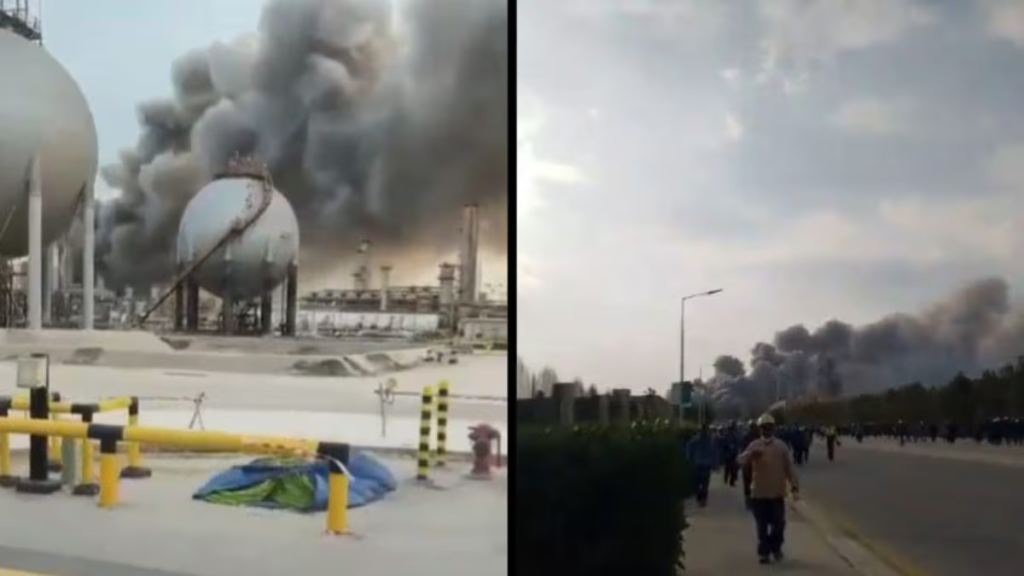
Saudi Arabia’s energy sector was jolted on Monday after a reported drone strike forced Saudi Aramco to shut down its Ras Tanura refinery as a precautionary measure. Industry sources said the strike triggered a fire at the facility, though officials later indicated the situation was under control and no casualties had been reported.
The refinery closure immediately rattled global oil markets. Brent crude prices surged nearly 9% in early trading, briefly pushing past the $80-per-barrel mark before easing to around $77.51. The sharp spike reflects growing investor anxiety over supply disruptions in the Middle East, a region that remains critical to global energy flows.
Unverified videos circulating on social media showed thick plumes of smoke rising from the facility. While Aramco has not yet issued a formal statement confirming the details, traders reacted swiftly, pricing in the risk of prolonged instability. Ras Tanura is one of the kingdom’s most significant refining hubs, playing a key role in processing and exporting petroleum products worldwide.
The strike comes at a time of heightened geopolitical tension. The broader confrontation involving Iran, the United States, and Israel has already unsettled energy markets. Recent developments, including retaliatory drone attacks following airstrikes that reportedly killed Iran’s Supreme Leader, Ali Khamenei, have intensified fears of a wider regional conflict.
At the center of market concerns lies the Strait of Hormuz, the narrow waterway that handles roughly one-fifth of the world’s oil supply. Although Iranian authorities have said the strait remains open, tanker traffic has slowed significantly as shipowners and traders impose a self-declared pause amid escalating risks. Reports of tanker attacks have further heightened uncertainty.
Energy analysts warn that even without an official blockade, the psychological impact of the conflict could disrupt supply chains. Around 10% of global gasoil trade and 20% of jet fuel shipments pass through Hormuz. Any sustained interruption could drive up transportation costs and squeeze industries ranging from aviation to manufacturing.
In response to mounting volatility, OPEC announced that it would proceed with a previously planned production increase of 206,000 barrels per day next month. The move is aimed at reassuring markets and preventing a severe supply crunch. However, experts caution that incremental output hikes may not fully offset disruptions if refinery shutdowns or shipping slowdowns persist.
Oil-importing countries are watching developments closely. A sustained rise in crude prices could feed into higher fuel costs and inflationary pressures, particularly in emerging economies. Financial markets have already begun reacting, with energy stocks climbing while broader indices show signs of volatility.
For now, the situation remains fluid. If tensions ease and refinery operations resume quickly, oil prices may stabilize. But if the conflict deepens or tanker movements through Hormuz decline further, the world could face renewed energy turbulence reminiscent of past oil shocks.

Summary Highlights:
Saudi Aramco shut the Ras Tanura refinery after a reported drone strike caused a fire; no casualties have been reported. Brent crude surged nearly 9% amid supply fears. Tensions around the Strait of Hormuz continue to disrupt tanker traffic. OPEC plans a modest production increase to calm markets. Global energy markets remain highly volatile as geopolitical risks intensify.