

Leader of Opposition in the Lok Sabha, Rahul Gandhi, on Sunday delivered a scathing critique of the Union Budget 2026–27, accusing the Narendra Modi-led government of being disconnected from India’s ground realities and ignoring the country’s most urgent economic challenges.
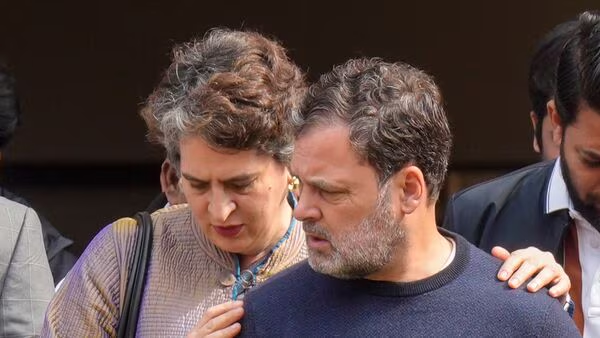
Speaking shortly after Finance Minister Nirmala Sitharaman presented the Budget in Parliament, Gandhi said the document failed to acknowledge rising unemployment, distress in the farming sector, stagnation in manufacturing, and declining household savings.
“Youth without jobs. Falling manufacturing. Investors pulling out capital. Household savings plummeting. Farmers in distress. Looming global shocks — all ignored,” Rahul Gandhi wrote in a post on X.
He concluded by calling the Budget “a refusal to course correct” and described it as “blind to India’s real crises.”
Congress Flags Jobs, Manufacturing and Farmers’ Distress
Rahul Gandhi’s criticism reflects a broader dissatisfaction within the Congress party, which has termed the Budget directionless and insensitive to the struggles faced by ordinary Indians.
According to Gandhi, the government has failed to revive manufacturing growth, a sector he says remains stuck around 13 percent, raising questions over the effectiveness of flagship initiatives like ‘Make in India’.
He also pointed to shrinking household savings and growing uncertainty among investors at a time when the global economy faces trade frictions, slowing exports, and geopolitical tensions.
What the Government Announced in Budget 2026
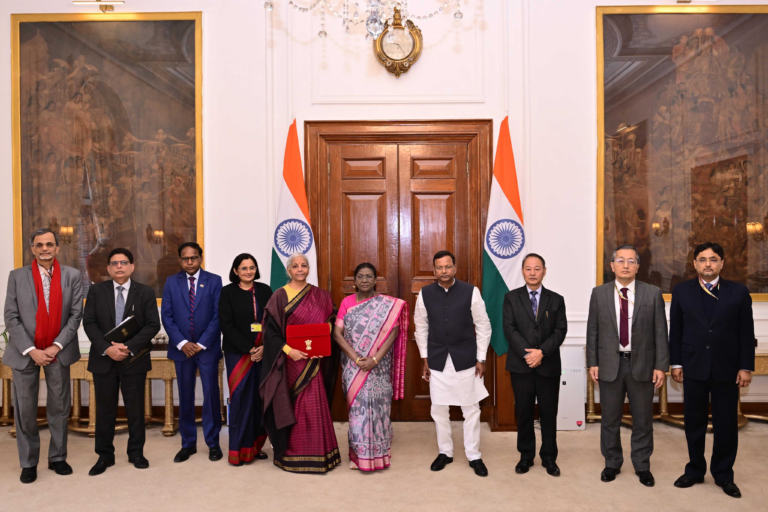
In her Budget speech, Finance Minister Sitharaman announced that the government would raise its capital expenditure (capex) target to ₹12.2 lakh crore for FY27, up from ₹11.2 lakh crore in the current fiscal year.
The Finance Minister said the increased spending would focus on:
- Infrastructure development
- Expansion in tier-2 and tier-3 cities
- Strengthening long-term economic growth
The government positioned the Budget as a response to global uncertainty, including trade barriers, tariff pressures, and a slowdown in exports.
This is the third Budget of the BJP-led NDA government in its third consecutive term.
Surjewala: ‘Politically Directionless, Policy-Wise Bankrupt’
Senior Congress leader Randeep Singh Surjewala delivered one of the harshest responses, describing the Budget as both “politically directionless” and “policy-wise bankrupt.”
In a strongly worded statement, Surjewala said:
“Technical mumbo jumbo, zero substance. Lots of committees, zero deliverables.”
He alleged that the Budget made no meaningful provisions for:
- Farmers
- Unemployed youth
- Labour force
- SC, ST, OBC communities
- Opposition-ruled states
Surjewala summed up his critique by saying, “The reform express has derailed even before leaving the station.”
Kharge Questions Budget’s Vision and Social Equity
Congress President Mallikarjun Kharge also joined the criticism, accusing the Modi government of lacking both policy vision and political will.
Kharge expressed disappointment over the absence of an income security plan for farmers, saying rural distress continues to deepen without adequate support.
He further claimed that economic inequality in India has crossed levels seen during the British era, yet the Budget does not acknowledge the issue or propose corrective measures.
According to Kharge, the Budget fails to address the concerns of SC, ST, OBC, EWS, and minority communities, leaving large sections of society without targeted support.
Political Battle Over Budget Narrative Intensifies
The sharp exchange over Budget 2026 highlights the growing political divide over India’s economic direction. While the government emphasises infrastructure spending and fiscal discipline, the Opposition argues that the Budget overlooks everyday realities such as jobs, farm incomes, and social equity.
As Parliament debates the Budget in the coming days, these contrasting narratives are expected to dominate political discourse, both inside and outside the House.