

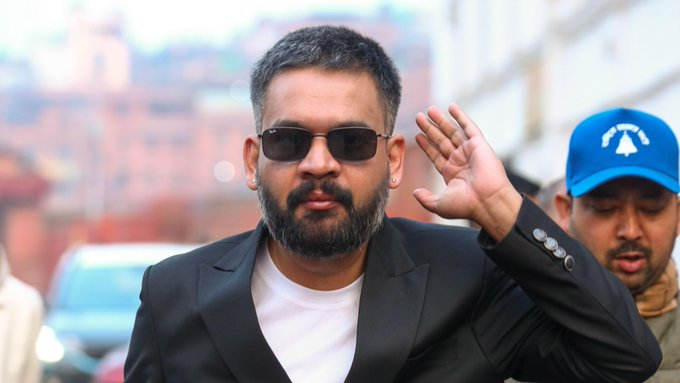
Nepal Election Result 2026: Nepal appears to be witnessing a major political shift as rapper-turned-politician Balendra “Balen” Shah and his Rastriya Swatantra Party (RSP) surge ahead in the country’s general elections. Early trends suggest the newly emerging party could secure a sweeping mandate, challenging the decades-long dominance of traditional political forces.
According to the latest figures released by Nepal’s Election Commission, results from 161 of the total 165 constituencies show the RSP gaining significant momentum. The party has already secured 27 seats and is leading in many more, putting it on track for a commanding presence in Nepal’s 275-member Parliament.
One of the most striking developments has come from Kathmandu, where the RSP has swept all ten constituencies in the district. The clean sweep highlights strong support for Shah among urban voters, particularly young people who played a key role in last year’s mass protests that reshaped Nepal’s political environment.
Traditional political parties have struggled to match the RSP’s momentum. The Nepali Congress has so far secured five seats, while the Nepali Communist Party has won two. The Communist Party of Nepal (Unified Marxist-Leninist) has managed just one victory so far. Meanwhile, early counting shows RSP candidates leading in as many as 97 additional seats, while other parties trail significantly.
Balendra Shah himself is leading comfortably in the Jhapa-5 constituency, widely considered a stronghold of former prime minister K P Sharma Oli, the chair of the CPN-UML. Shah has secured more than 39,000 votes, leaving Oli far behind with just over 10,000 votes so far. The result reflects a dramatic shift in public mood and growing dissatisfaction with established political leaders.
Shah, popularly known as “Balen,” first rose to national prominence as a rapper before entering politics. The 35-year-old engineer later served as the mayor of Kathmandu, where his anti-corruption stance and straightforward style earned him strong support among young voters. His political rise has been closely tied to the demands of Nepal’s younger generation for transparency, accountability and a break from traditional power structures.
The election itself follows a turbulent year in Nepalese politics. In September last year, large-scale protests led primarily by Gen Z activists forced the resignation of Prime Minister Oli’s coalition government. The protests were fueled by widespread anger over corruption, nepotism and the perceived failure of political elites to deliver meaningful reforms.
After the government collapsed, President Ramchandra Paudel dissolved the House of Representatives and appointed Sushila Karki as caretaker prime minister, paving the way for fresh elections. Many young voters viewed the new election as an opportunity to bring generational change to Nepal’s leadership.
Despite strong public demand, Shah initially declined to lead the interim government, saying he preferred to seek a full mandate through democratic elections. Earlier this year, he formally joined the Rastriya Swatantra Party, which was founded in 2022 by journalist-turned-politician Ravi Lamichhane. The party quickly positioned Shah as its prime ministerial candidate.
The campaign focused heavily on issues that resonated with younger voters, including anti-corruption reforms, transparent governance, merit-based leadership and an end to political nepotism. These themes gained widespread traction across cities and among first-time voters.
Nepal’s Parliament consists of 275 members, with 165 elected through direct voting and the remaining 110 chosen through a proportional representation system. Nearly 18.9 million citizens were eligible to vote in this election, and voter turnout reached around 60 percent.
More than 3,400 candidates contested the 165 directly elected seats, while over 3,100 candidates competed for the proportional representation seats. The large number of candidates reflected the intense political competition and heightened public interest following last year’s protests.
The election outcome is also being closely monitored internationally, especially by India, which shares deep economic, cultural and strategic ties with Nepal. Officials in New Delhi have expressed hope that the election will produce a stable government capable of strengthening bilateral cooperation and continuing development projects between the two neighbors.
India’s Ministry of External Affairs spokesperson Randhir Jaiswal recently said New Delhi looks forward to working with Nepal’s new government to further deepen the multifaceted relationship between the two countries. India also provided logistical support to assist Nepal in conducting the elections.
Also Read
 Jay Pawar Shares Video Allegedly Showing VSR Ventures Owner Rohit Singh Sleeping in Cockpit
If current trends continue, Balendra Shah could soon become Nepal’s next prime minister, marking a remarkable transformation in the country’s politics. The rise of a former rapper to the nation’s highest political office would symbolize the growing power of youth-driven political change and the desire among voters for a new generation of leadership.
For many young Nepalese voters, the election represents more than just a change of government. It signals a broader demand for clean governance, accountability and a political system that reflects the aspirations of a new generation.