

As Team India sharpens its preparations for the upcoming T20 World Cup, a familiar selection dilemma has quietly returned to the spotlight. Sanju Samson, once seen as the answer to India’s opening conundrum, now finds himself at the centre of renewed debate as form begins to clash with faith.
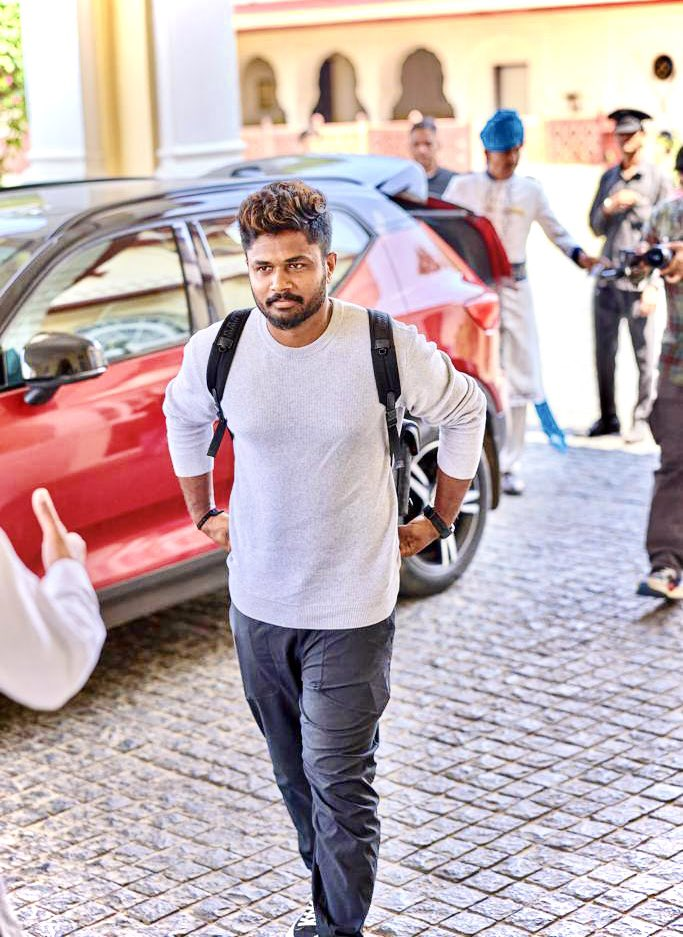
When the selectors finalised the T20 World Cup squad, Samson emerged as the preferred partner for Abhishek Sharma at the top of the order. The decision came at the expense of Shubman Gill and was driven largely by team combinations. Samson offered flexibility as both an aggressive opener and a wicketkeeper, a balance the team management believed was crucial in modern T20 cricket. Chief selector Ajit Agarkar later clarified that Gill’s omission was not a reflection of ability but a strategic call.
In many ways, the move corrected an earlier decision made ahead of the Asia Cup in 2025. India had persisted with the Abhishek-Samson opening combination across multiple series in 2024 and early 2025, but Samson was forced into the middle order when Gill was reintegrated after Test commitments. That shift did not work in Samson’s favour. His effectiveness dipped, and he struggled to adapt to a role that demanded finishing skills rather than explosive starts.
By the time World Cup discussions began, the narrative flipped again. Gill’s form had dipped, Samson returned to the top of the order, and Ishan Kishan — fresh off a prolific domestic season — was included as reserve wicketkeeper and top-order cover. At that moment, India’s batting puzzle appeared neatly solved.
However, cracks have since appeared. Despite India sealing a dominant T20I series win built on commanding batting performances, Samson’s contributions were minimal. Early dismissals continued to plague him, including a first-ball dismissal in Guwahati where he misjudged his movement and exposed his stumps.
Former India batter Ajinkya Rahane offered a technical insight, pointing out Samson’s tendency to move too deep into the crease. That backward movement, Rahane suggested, has left Samson upright and vulnerable, leading to dismissals in the leg-side region. In the unforgiving pace of T20 cricket, such marginal flaws can quickly snowball into prolonged slumps.
What makes Samson’s situation more concerning is that the issue is no longer isolated to one series. Since January 2025, he has crossed the PowerPlay only once in nine T20I innings as an opener. His average during this period stands at a modest 11.55, a stark contrast to the form that once pushed him ahead of Gill. While his 2024 centuries against Bangladesh and South Africa still linger in memory, international cricket rarely allows reputations to outweigh current returns for long.
Complicating matters further is the resurgence of Ishan Kishan. Initially included as backup, Kishan has seized his opportunities with fearless intent. His aggressive starts alongside Abhishek Sharma have injected momentum into India’s PowerPlay overs, turning brief cameos into impactful statements. His comfort as an opener and his confidence with the bat have not gone unnoticed by the team management.
The equation becomes even tighter with Tilak Varma set to return from injury. As one of the world’s top-ranked T20I batters, Tilak is expected to slot straight back into the No.3 position, leaving India to juggle roles between Samson and Kishan at the top.
Despite the growing chatter, Samson is unlikely to be dropped immediately. The management has recently reaffirmed its belief in him, and India has traditionally valued continuity over impulsive changes. With a few games still left before the World Cup, Samson will be backed to rediscover his touch and confidence.
Yet, time is no longer an unlimited ally. If the lean run continues, India may once again face a high-stakes decision just before the tournament begins — and as has often been the case, Sanju Samson will find himself at the heart of it.