

The escalating conflict between Iran, the United States, and Israel has begun to significantly impact global aviation, forcing airlines to cancel hundreds of flights and leaving thousands of passengers uncertain about their travel plans. India’s Civil Aviation Ministry confirmed early Sunday that approximately 444 overseas flights are expected to be cancelled on March 1 due to airspace restrictions over Iran and other parts of the Middle East.
The disruption follows a tense military escalation in the region after US and Israeli strikes on Iranian targets, and retaliatory actions by Tehran. With several West Asian air corridors either restricted or temporarily closed, airlines are being compelled to reassess flight paths that typically operate through or near the affected airspace. Just a day earlier, on February 28, around 410 flights operated by domestic carriers were cancelled, highlighting the rapidly worsening situation.
Government officials held urgent meetings to evaluate how prepared airlines and airports are to handle the disruption. Senior aviation authorities have been deployed at major airports to oversee passenger management, coordinate diversions if required, and ensure smooth terminal operations. The Directorate General of Civil Aviation is working closely with airlines to ensure strict compliance with safety and operational norms during this volatile period.
Air India announced the cancellation of multiple long-haul international services scheduled for March 1, citing safety concerns as the situation in the Middle East continues to evolve. The affected routes include key destinations such as London (Heathrow and Gatwick), New York (JFK and Newark), Chicago, Toronto, Frankfurt, and Paris. Flights from Delhi, Mumbai, and Amritsar to Europe and North America have been impacted. An airline spokesperson stated that the decision was taken in the interest of passenger and crew safety, and that the carrier is closely monitoring developments before making further operational decisions.
Meanwhile, Qatar Airways temporarily suspended departures from Doha, cancelling nearly 41 percent of its scheduled flights. The airline indicated that operations are expected to resume later in the evening on March 1, depending on the evolving security environment. The suspension has affected connecting passengers worldwide, particularly those using Doha as a transit hub between Asia, Europe, and North America.
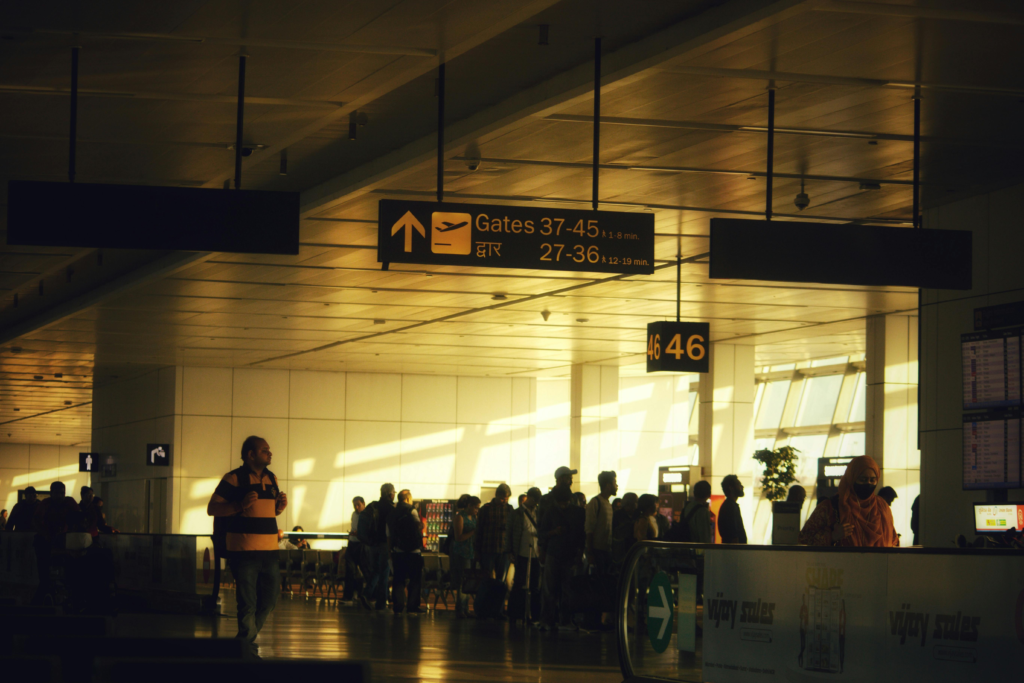
Major Indian airports have been placed on operational alert. Authorities confirmed that passenger assistance desks are functioning round the clock, airline coordination mechanisms have been strengthened, and crowd management protocols are being closely monitored. The Passenger Assistance Control Room is actively tracking complaints and working to resolve issues promptly. During the recent disruption window, the government’s AirSewa platform received 216 passenger grievances, of which 105 were resolved within the same period, reflecting ongoing efforts to support stranded travelers.
The Indian Embassy in Riyadh has also issued an advisory for Indian nationals stranded in Saudi Arabia due to flight cancellations or airspace closures. The embassy has activated 24×7 helplines and urged passengers to stay in touch with their respective airlines for the latest updates.
Aviation experts note that Middle Eastern air corridors are critical for flights connecting India with Europe and North America. When these routes are restricted, airlines must take longer alternative paths, increasing fuel requirements, flight duration, and operational complexity. Safety assessments, geopolitical uncertainty, and logistical constraints are all contributing to the large-scale cancellations.

The situation remains fluid, and further changes to flight schedules cannot be ruled out. Passengers are strongly advised to check flight status before leaving for the airport, monitor official airline announcements, and remain prepared for possible delays or rescheduling. As geopolitical tensions continue to unfold, the aviation sector finds itself navigating not only crowded skies, but also a rapidly shifting global security landscape.
Summary – Key Highlights:
Around 444 overseas flights likely cancelled on March 1; 410 flights were cancelled on February 28; Air India suspends major routes to Europe and North America; Qatar Airways halts significant portion of Doha departures; DGCA and Civil Aviation Ministry monitoring safety and operations; Indian Embassy in Riyadh activates emergency helplines; passenger assistance mechanisms operating at full capacity.