

New Delhi | January 27, 2026: India and the European Union have successfully concluded negotiations on a long-awaited Free Trade Agreement, marking a major breakthrough in one of India’s most important global economic partnerships. The landmark deal, often described by officials as the “mother of all trade agreements,” is expected to be formally announced today during the India-EU Summit in New Delhi.
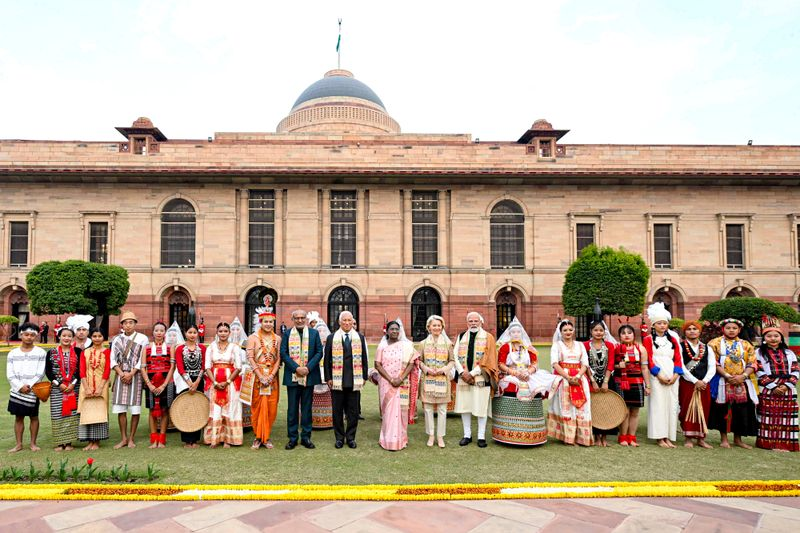
The timing of the agreement is significant, coming amid heightened global economic uncertainty and visible strains in transatlantic relations between Europe and the United States. Against this backdrop, the India-EU pact signals a strategic realignment, with both sides seeking stable, long-term partnerships to strengthen trade and supply-chain resilience.
Prime Minister Narendra Modi is hosting European Commission President Ursula von der Leyen and European Council President António Costa at the summit, underscoring the strong political backing behind the agreement. Commerce Secretary Rajesh Agrawal confirmed that negotiations have concluded after months of intensive discussions aimed at resolving long-standing differences.
Talks on the India-EU Free Trade Agreement were revived in 2022 after remaining stalled for nearly eight years. Since then, negotiations progressed faster than anticipated, driven by changing global trade dynamics, rising protectionism, and a shared desire to reduce dependence on concentrated manufacturing hubs. Once ratified, the agreement will cover a combined market of nearly two billion people, making it one of the largest trade arrangements India has ever entered into.
Trade officials said the pact is among India’s most ambitious, covering goods, services, investment, and regulatory cooperation. Key provisions include reduced tariffs on European automobiles, machinery, and wines, alongside improved market access for Indian exports such as textiles, gems and jewellery, pharmaceuticals, and electronics. The agreement also includes measures to facilitate the movement of skilled professionals, addressing a long-standing demand from India.
For India, the European Union remains its largest trading partner in goods, while the EU views India as a rapidly expanding market and a reliable manufacturing base. European companies are increasingly looking towards India as they diversify supply chains and seek alternatives to over-concentrated production centres.
Beyond trade, the agreement is expected to reinforce broader cooperation in clean energy, critical minerals, semiconductors, and digital technologies. These areas align closely with Europe’s Indo-Pacific strategy and India’s push to strengthen its industrial and technological capabilities.
What the Agreement Covers
A Broad and Ambitious Trade Framework
Trade officials described the pact as comprehensive, covering multiple sectors and regulatory areas:
- Goods and Services Trade: Significant tariff reductions on European automobiles, machinery, and wines
- Market Access for India: Improved entry for Indian textiles, gems and jewellery, pharmaceuticals, and electronics
- Investment and Regulation: Stronger frameworks for investor protection and regulatory cooperation
- Skilled Mobility: Provisions to facilitate the movement of Indian professionals across EU member states
The agreement is expected to provide a major boost to Indian exporters while offering European firms deeper access to one of the world’s fastest-growing large economies.
FTA Revived After Years of Stalemate
The FTA breakthrough comes amid a broader upswing in bilateral engagement. Recently, EU High Representative for Foreign Affairs and Security Policy Kaja Kallas announced that India and the EU would move forward with a new Security and Defence Partnership, expanding collaboration in maritime security, cybersecurity, and counter-terrorism.
Officials cautioned that while negotiations have concluded, the agreement will undergo legal scrubbing and ratification procedures before it comes into force. Once implemented, the India-EU Free Trade Agreement is expected to significantly boost bilateral trade, deepen strategic trust, and enhance economic resilience for both partners in an increasingly fragmented global economy.