

The death of Geetanjali, wife of Haryana judge Ravneet Garg, remains one of the most disturbing and unresolved criminal cases in India’s recent judicial history. More than a decade after she was found shot dead in a Gurugram park, a CBI Special Court described her killing as a “cold-blooded murder” even while acquitting her husband and in-laws of all charges. The verdict has left behind not closure, but deeper uncertainty about who was actually responsible for her death.
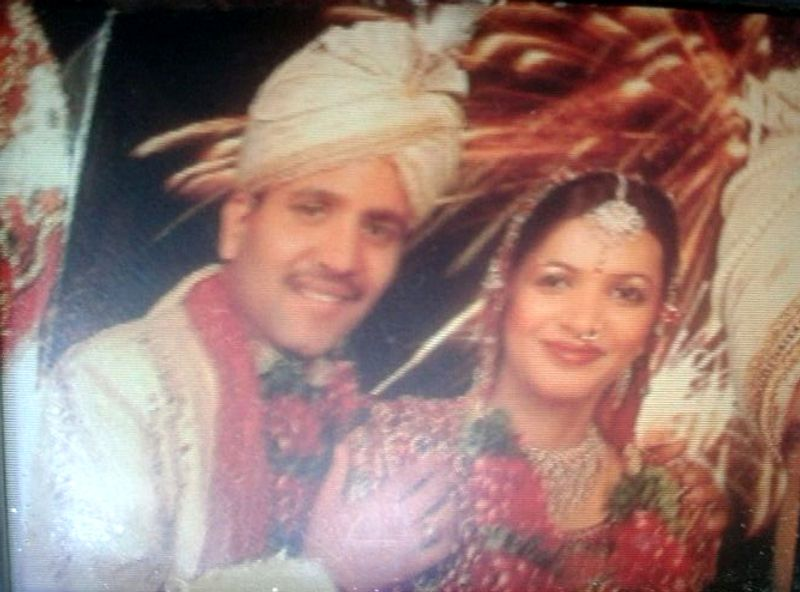
A Death That Shook Gurugram
Geetanjali, just 28 years old and the mother of two young daughters, was found on July 17, 2013, with multiple bullet injuries near the Police Lines in Gurugram. A licensed revolver belonging to her husband was discovered near her body. Ravneet Garg, then serving as Chief Judicial Magistrate, had been attending court and later a video conference with the High Court that day. When he returned home and did not find his wife, he informed the police. A local resident was the first to see her lifeless body lying in the park, with her eyes open and her belongings scattered nearby. No CCTV cameras were working along the route from the judge’s residence to the park, and Geetanjali had left behind her mobile phone, making her last movements impossible to trace.
The post-mortem revealed four injuries, including bullet wounds to her chest and chin, both of which were declared fatal. Doctors testified that a gunshot to the chin could lead to death within minutes. This raised serious doubts about whether she could have fired multiple shots at herself, as the CBI later claimed. Even more troubling was the absence of gunshot residue on her hands, something that would normally be expected if she had pulled the trigger herself.
Two medical boards later gave conflicting opinions. One forensic panel of senior doctors from Delhi concluded that the pattern of injuries was more consistent with homicide. They noted that the weapon was not found close to her hand, that multiple fatal wounds were present, and that the scalp injury appeared to be caused by a bullet graze rather than a fall. They also stated that firing so many shots on oneself was extremely unlikely. In contrast, an AIIMS medical board supported the suicide theory, arguing that hesitation wounds and multiple gunshots, though rare, were medically possible and documented in forensic literature.
The Judge Who Rejected the Suicide Theory
CBI Special Judge Rajeev Goyal rejected the suicide narrative. In his judgment, he stated that a person shot in the chin or chest would not have the physical ability to fire additional rounds. He also pointed out that crucial forensic evidence, including fingerprints on the revolver, was never examined. Even more significantly, ballistic analysis indicated that two different types of bullets had been fired, suggesting the presence of another weapon at the scene. This meant there had to be someone else present when Geetanjali was killed.
Despite this, the investigation focused heavily on dowry harassment. Geetanjali’s family initially alleged murder but later accused Ravneet Garg and his parents of demanding money, gold, and expensive cars. The CBI filed charges of dowry death, cruelty, and conspiracy. However, during the trial, key witnesses changed their statements, and the court found serious inconsistencies in their testimony. Ultimately, the prosecution failed to prove dowry harassment or abetment of suicide.
The court criticised the CBI for diverting attention away from what appeared to be a clear case of murder. It noted that Geetanjali had been using a friend’s Facebook account, had obtained a secret phone, and may have gone to the park to meet someone without her husband’s knowledge. None of these angles were properly investigated. Digital evidence was never recovered, and the identity of the possible third person at the crime scene was never established.
In the end, Ravneet Garg and his parents were acquitted, but the court made it clear that Geetanjali did not take her own life. The judge acknowledged that no one had received justice and that the greatest victims were the couple’s two daughters, who lost their mother under circumstances that still remain shrouded in mystery.
More than a decade later, the question remains unanswered: if Geetanjali was murdered, who pulled the trigger?