

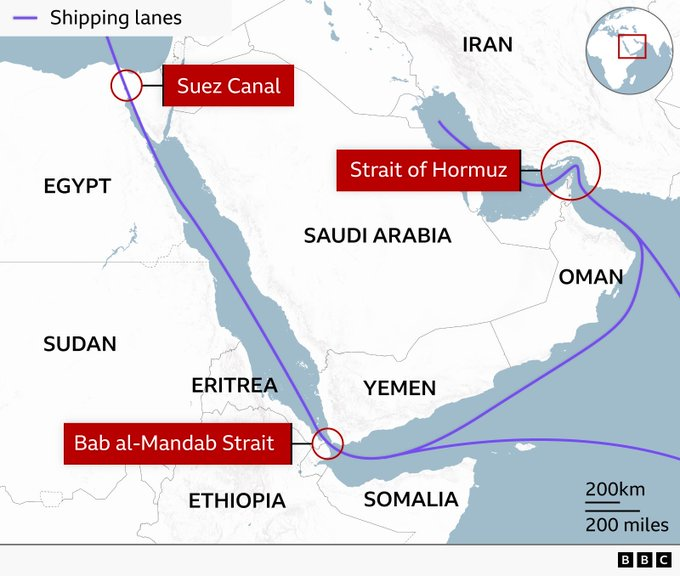
In a dramatic development with far-reaching global consequences, Donald Trump has announced that the United States will begin blocking ships entering or leaving the strategically vital Strait of Hormuz. The announcement, made on Sunday, signals a major escalation in the ongoing confrontation between the United States and Iran and has already raised alarm across international diplomatic and energy circles.
Trump said the move would take effect immediately and would be enforced by the United States Navy. In a message posted on the social media platform Truth Social, the US president declared that naval forces would begin the process of intercepting ships attempting to pass through the narrow but critical maritime corridor.
According to Trump, the decision was taken in response to what he described as Iran’s attempts to disrupt maritime traffic and demand transit payments from ships using the route. He accused Tehran of using the threat of naval mines and shipping disruptions as a form of pressure on the international community.
Trump warned that vessels suspected of paying what he called illegal transit tolls to Iran could face interception by US naval forces. He emphasized that the United States would not tolerate what he described as “world extortion,” and insisted that global shipping lanes must remain free from coercion.
The Strait of Hormuz is widely regarded as one of the most critical maritime chokepoints in the world. Located between Iran and Oman, the narrow waterway connects the Persian Gulf to the Arabian Sea and serves as a vital route for international energy trade. Nearly one-fifth of the world’s oil supply passes through this corridor every day.
Energy exports from major oil-producing countries such as Saudi Arabia, United Arab Emirates, Kuwait and Iraq rely heavily on uninterrupted passage through the strait. Any disruption in this narrow passage can trigger sharp fluctuations in global oil prices and potentially disrupt international trade.
The situation has also drawn attention in India, where maritime authorities and shipping companies are closely monitoring developments. Reports indicate that about ten Indian-flagged vessels have already passed through the Strait of Hormuz with permission from Iranian authorities since tensions escalated earlier this year. However, around fifteen Indian ships remain stranded near the strategic chokepoint, highlighting the risks faced by commercial shipping in the region.
The current crisis comes after recent negotiations between Washington and Tehran collapsed during talks held in Islamabad. The discussions were primarily focused on Iran’s nuclear programme, which remains the central issue behind the confrontation. Trump reiterated that preventing Iran from acquiring nuclear weapons capability remains a key objective of US policy.
He also hinted that other countries might join the United States in enforcing the blockade, suggesting the possibility of a wider international coalition. However, no specific partners have been officially named so far.
The US president issued a stern warning to Tehran against any retaliation. Trump stated that American forces were fully prepared to respond if Iranian military units attempted to interfere with US operations or attack commercial vessels in the region.
He further indicated that US naval forces could begin mine-clearing operations in the Strait of Hormuz, a move that could potentially lead to direct military engagement in one of the world’s most sensitive waterways.

As of now, officials in Iran have not issued an immediate public response to the announcement. However, international observers expect strong reactions from several countries due to the legal, economic and security implications of restricting movement through an international shipping lane.
With global energy markets heavily dependent on safe passage through the Strait of Hormuz, the situation is being closely watched by governments, shipping companies and financial markets worldwide. Any prolonged disruption in the region could reshape geopolitical dynamics and place significant pressure on global oil supplies.