
₹2,000 Monthly Aid for Women, Free Bus Travel for Men, Housing for the Needy Among Major Assurances

Chennai | Tamil Nadu Elections 2026 : With the Tamil Nadu Assembly elections scheduled for 2026, political activity across the state has gathered pace. The All India Anna Dravida Munnetra Kazhagam (AIADMK) has moved early, announcing a set of five major welfare promises aimed at women, rural workers, and economically weaker sections of society.
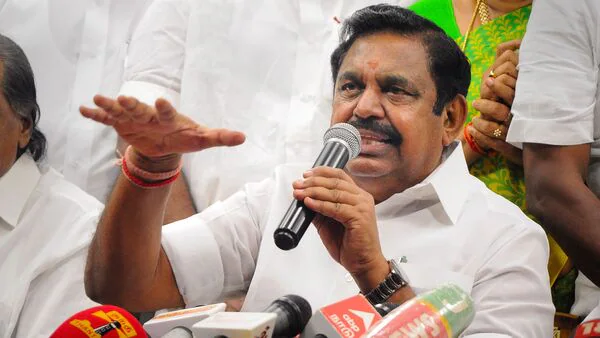
The announcements were made by AIADMK General Secretary and former Chief Minister Edappadi K Palaniswami on Saturday, coinciding with the 109th birth anniversary of party founder and former Chief Minister M.G. Ramachandran (MGR). The proposals mark the first phase of the party’s election roadmap as it prepares to challenge the ruling Dravida Munnetra Kazhagam (DMK) in 2026.
1) ₹2,000 Monthly Assistance for Women (Kulavilakku Scheme)
Under the Kulavilakku Scheme, the AIADMK has promised a monthly financial assistance of ₹2,000 to all ration card–holding families in Tamil Nadu. The amount will be directly transferred to the bank account of the woman head of the household.
The party says the scheme is aimed at strengthening women’s financial independence and helping families manage rising household expenses. Women-centric welfare is expected to be a key battleground issue in the upcoming elections.
2) Free Bus Travel for Men, Women’s Scheme to Continue
In a major expansion of public transport benefits, the AIADMK announced that free bus travel will be extended to men travelling on city buses. At the same time, the existing free bus travel scheme for women will continue without any changes.
If implemented, the move would make public transport in cities free for all, benefiting daily wage workers, students, and lower-income commuters who rely heavily on buses for daily travel.
3) Amma Illam Scheme: Free Houses for the Homeless
Housing support forms another major pillar of the AIADMK’s promises. Under the Amma Illam Scheme, the party has pledged to provide permanent homes to families who do not own a house.
In rural areas, the government will purchase land and construct concrete houses. In urban areas, land will be acquired to build apartment complexes, which will be allotted free of cost to eligible families. According to local media reports, the scheme will also support Scheduled Caste families when sons living in joint households move out after marriage, with the government providing land and housing assistance.
A similar housing initiative is currently being implemented by the DMK government under the Kalaignar Housing Scheme, setting the stage for direct welfare comparisons during the campaign.
4) Rural Employment Scheme Expanded to 150 Days
The AIADMK has also promised to expand the rural employment guarantee programme to provide 150 days of work per year. This goes beyond the Centre’s recent increase of the scheme to 125 days.
The proposal aims to offer additional income security to rural households, particularly during non-agricultural seasons, and could resonate strongly among village voters and daily wage labourers.
5) Amma Two-Wheeler Scheme for Five Lakh Women
Reintroducing one of its earlier flagship programmes, the AIADMK announced the return of the Amma Two-Wheeler Scheme. Under this initiative, five lakh women will be provided two-wheelers with a government subsidy of ₹25,000 per beneficiary.
The scheme is intended to improve mobility for working women, students, and small entrepreneurs, especially in semi-urban and rural regions.
Tamil Nadu is expected to go to the polls in the first half of 2026. The AIADMK has recently renewed its alliance with the Bharatiya Janata Party (BJP) after breaking ties in 2023. The AIADMK-led NDA is aiming to reclaim power after losing the 2021 Assembly elections, despite a subdued performance in the 2024 Lok Sabha polls.
Meanwhile, the ruling DMK enters the election year with confidence following its strong showing in the parliamentary elections. Political observers expect welfare schemes, governance record, and alliance dynamics to dominate the campaign narrative in the months ahead.