

The Supreme Court of India has raised serious concerns over the rapidly deteriorating condition of Chandigarh’s iconic Sukhna Lake, sharply criticising what it described as a deep-rooted nexus between builders, bureaucrats, and political interests that is allegedly causing irreversible ecological damage to the water body.
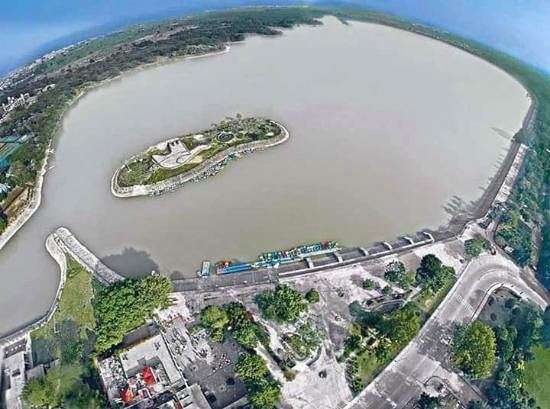
During a hearing on Wednesday, the apex court questioned how much further the lake would be allowed to dry up, observing that illegal constructions in and around its catchment area were continuing despite repeated judicial interventions. The court remarked that such activities appeared to be taking place in collusion with officials and with the backing of political entities in Punjab, resulting in the steady destruction of the lake.
The strong observations were made by a three-judge Bench led by Chief Justice of India Surya Kant, along with Justice Joymalya Bagchi and Justice Vipul M Pancholi. The remarks came after a lawyer mentioned issues related to Sukhna Lake during the hearing of a long-pending public interest litigation titled “In Re: TN Godavarman Thirumulpad,” a landmark case dealing with forest conservation and environmental protection.
At the time, the Bench was also hearing a suo motu matter concerning the definition of the Aravalli Hills, in which it had earlier stayed its decision to accept the Centre’s revised definition. Expressing displeasure over the condition of Sukhna Lake, the court warned that unchecked encroachments and illegal constructions were undermining the ecological balance of the region.
The Bench also questioned why matters relating to forests and lakes were repeatedly being brought directly before the Supreme Court, often through interim applications in decades-old cases, instead of being addressed by the respective High Courts. It observed that several such cases appeared to resemble a “friendly match” initiated at the behest of private developers and other vested interests.
To address this concern, the court asked Additional Solicitor General Aishwarya Bhati, appearing for the Centre, along with amicus curiae K Parameshwar, to identify local issues that could be effectively dealt with by High Courts, rather than burdening the apex court with matters better handled at the regional level.
Sukhna Lake, a man-made and rain-fed water body, was created in 1958 by damming the Sukhna Choe stream at the foothills of the Shivalik Hills. Over the years, it has become one of Chandigarh’s most prominent tourist attractions and an important ecological asset. The lake supports rich biodiversity and serves as a seasonal habitat for several migratory bird species during winter.

In 2020, the Punjab and Haryana High Court had ordered the demolition of illegal structures around the lake to prevent further encroachments and protect its catchment area. However, the Supreme Court’s latest remarks indicate that enforcement on the ground has remained inadequate, allowing violations to continue.
The court’s observations underscore growing judicial concern over environmental governance and the failure to safeguard ecologically sensitive zones from commercial exploitation. Legal experts believe the stern warning from the apex court could prompt stricter accountability of officials and renewed action against illegal constructions threatening the future of Sukhna Lake.