

The Supreme Court on Thursday reserved its verdict on a petition filed by Allahabad High Court judge Justice Yashwant Varma, who has challenged the constitutional validity of a parliamentary inquiry panel probing serious corruption allegations against him. The case has drawn national attention as it touches upon the delicate balance between judicial independence and parliamentary oversight.
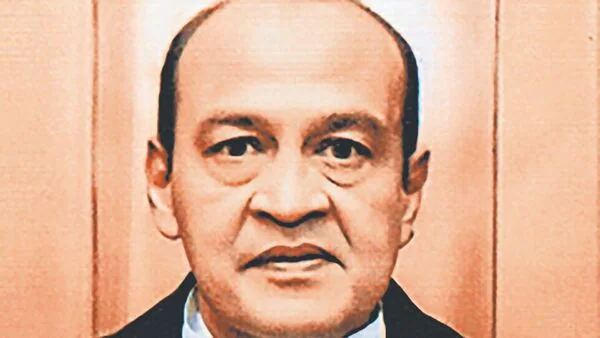
A bench of Justice Dipankar Datta and Justice S.C. Sharma heard detailed arguments from both sides before deciding to reserve its judgment. Senior advocates Mukul Rohatgi and Siddharth Luthra, appearing for Justice Varma, argued that the procedure adopted by the Lok Sabha Speaker violated the Judges (Inquiry) Act, 1968. They contended that only the Speaker of the Lok Sabha and the Chairman of the Rajya Sabha together have the authority to admit a motion for the removal of a judge, and that a unilateral move was not legally permissible.
The lawyers also pointed out that since a similar motion had already been rejected in the Rajya Sabha, the Lok Sabha Speaker could not have proceeded independently to set up an inquiry committee. According to them, the entire process lacked legal backing and undermined the safeguards built into the law to protect judicial officers from arbitrary action.
Representing both Houses of Parliament, Solicitor General Tushar Mehta defended the Speaker’s decision. He told the court that when a motion for removal is admitted, the law allows a joint inquiry committee to be constituted by the Speaker and the Rajya Sabha Chairman. He maintained that the panel had been formed strictly in accordance with constitutional and statutory provisions.
The Supreme Court, during earlier hearings, had also observed that the Judges Inquiry Act does not impose any explicit bar on the Lok Sabha Speaker forming an inquiry committee even if a similar motion was not admitted by the Rajya Sabha.
The controversy involving Justice Varma began in March when burnt bundles of currency notes were reportedly found at his official residence in New Delhi. At that time, he was serving as a judge of the Delhi High Court. Following the incident, he was transferred back to the Allahabad High Court, and an in-house inquiry was ordered by then Chief Justice of India Sanjiv Khanna.
A three-member judicial committee, comprising two High Court chief justices and a sitting Supreme Court judge, later found Justice Varma guilty of misconduct in a report submitted on May 4. When he declined to resign, the Chief Justice forwarded the report and his response to the President and the Prime Minister, paving the way for impeachment proceedings.
On August 12, Lok Sabha Speaker Om Birla admitted a multi-party motion seeking Justice Varma’s removal and constituted a new three-member inquiry committee. The panel includes Supreme Court Justice Aravind Kumar, Madras High Court Chief Justice Manindra Mohan Shrivastava, and senior advocate B.V. Acharya.
Justice Varma has challenged this action before the Supreme Court, seeking to quash the Speaker’s decision, the admission of the removal motion, and all notices issued by the inquiry committee. He has argued that the entire process is unconstitutional and violates the Judges (Inquiry) Act.
With the Supreme Court now reserving its verdict, the future of the parliamentary inquiry hangs in the balance. The ruling will be crucial not only for Justice Varma but also for setting a precedent on how allegations against judges are investigated and how impeachment procedures are carried out in India.