

The Supreme Court of India on January 16 dismissed a petition filed by Allahabad High Court judge Justice Yashwant Varma, rejecting his challenge to the constitutionality of a parliamentary committee constituted to probe corruption allegations against him. The verdict clears the way for the Lok Sabha–appointed inquiry panel to continue its work under the Judges (Inquiry) Act, 1968.
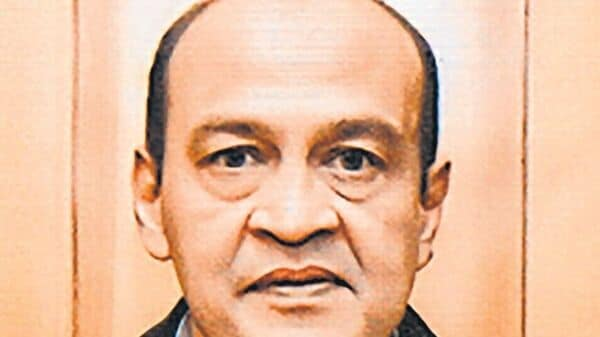
A bench comprising Justices Dipankar Datta and SC Sharma delivered the ruling, days after reserving its judgment on January 8. Justice Varma had approached the apex court seeking to quash the decision of the Speaker of the Lok Sabha to constitute a three-member inquiry committee as part of impeachment proceedings initiated against him.
In his petition, Justice Varma argued that the Speaker’s decision was procedurally flawed. He contended that an impeachment motion seeking his removal had earlier been rejected in the Rajya Sabha, and therefore, the Lok Sabha Speaker could not independently proceed with the inquiry. According to him, the proviso to Section 3 of the Judges (Inquiry) Act mandates joint consultation between the Lok Sabha Speaker and the Rajya Sabha Chairman when impeachment notices are moved in both Houses of Parliament.
Opposing the plea, the Lok Sabha Secretariat submitted that the impeachment motion in the Rajya Sabha was never admitted. Representing the parliamentary authorities, Solicitor General Tushar Mehta told the court that the motion was rejected by the Deputy Chairman of the Rajya Sabha on August 11, 2025, following the resignation of then Vice President and Rajya Sabha Chairman Jagdeep Dhankhar in July that year. Since the Upper House did not admit the motion, the proviso cited by Justice Varma was not applicable, he argued, and the Speaker of the Lok Sabha was well within her अधिकार to proceed independently.
During the hearings, the Supreme Court questioned whether any provision of law prevented the Lok Sabha Speaker from continuing impeachment proceedings merely because a similar motion had failed in the Rajya Sabha. The bench also expressed its disagreement with the argument that rejection in one House would automatically derail the impeachment process.
The allegations against Justice Varma stem from a fire incident at his official residence on March 14, 2025. Firefighters responding to the blaze reportedly recovered unaccounted cash from the premises. Justice Varma has consistently denied any wrongdoing. However, in the aftermath of the incident, he was transferred from the Delhi High Court to his parent Allahabad High Court and was divested of judicial responsibilities pending further action.
An in-house inquiry was later initiated by then Chief Justice of India Sanjiv Khanna, who subsequently asked Justice Varma to resign or face impeachment proceedings. Justice Varma declined to step down, prompting Members of Parliament to move an impeachment motion in the Lok Sabha. The Speaker admitted the motion in August 2025 and constituted a three-member committee to investigate the allegations under the Judges (Inquiry) Act.
Justice Varma then approached the Supreme Court, challenging the legality of the inquiry process. With Thursday’s ruling, the apex court has effectively upheld the Speaker’s authority and allowed the parliamentary probe to continue.
Senior advocates Sidharth Luthra, Mukul Rohatgi, and Jayant Mehta appeared on behalf of Justice Varma, while Solicitor General Tushar Mehta represented the Lok Sabha and Rajya Sabha authorities.
The verdict is being seen as a significant reaffirmation of Parliament’s role in ensuring judicial accountability and clarifies that procedural outcomes in one House do not automatically halt impeachment proceedings initiated in the other.