

In a major move to protect one of India’s most fragile ecological zones, the Supreme Court has ordered a fresh expert review of the Aravalli Hills definition, placing its earlier November 20 ruling on hold.
A three-judge special vacation bench led by Chief Justice of India Surya Kant made it clear that environmental protection cannot rely on technical loopholes. The court said a fair, independent, and scientifically sound review must guide any future policy affecting the Aravalli range.
Why the Aravalli Definition Matters
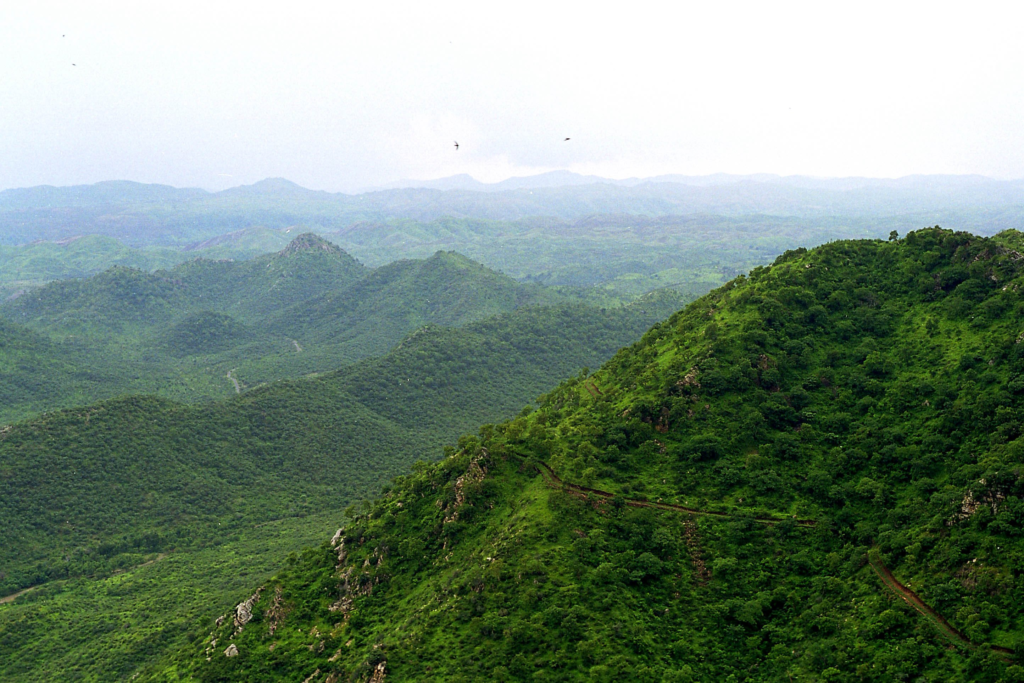
The Aravalli range stretches across Rajasthan, Haryana, and parts of Delhi, acting as a natural shield against desertification and groundwater depletion. However, its legal definition has remained controversial.
Earlier, the Aravalli was defined as land falling within 500 meters between two hills and having elevation above 100 meters. Environmentalists warned that this formula excluded vast stretches of connected hills, leaving them vulnerable to mining and construction.
The Supreme Court acknowledged that this narrow definition may have unintentionally opened doors for unregulated mining and environmental degradation.
What the New Expert Panel Has Been Asked to Do
The court directed the newly formed expert committee to consult all stakeholders — including environmental groups, geologists, and state authorities — before giving its recommendations.
The panel must examine:
1. Whether the 500-meter Rule Creates Gaps
Does limiting protection to 500 meters between hills break the ecological continuity of the Aravalli range?
2. Whether Elevation-Based Criteria Is Flawed
Is it true that only 1,048 out of 12,081 hills in Rajasthan qualify under the 100-meter elevation rule, stripping most hills of protection?
3. Whether Mining in ‘Gaps’ Can Harm the Ecosystem
Can regulated mining between hills damage the overall environmental stability of the region?
4. Which Areas Will Be Protected or Excluded
The panel must clearly map out which regions will fall under protection and which will not.
5. Long-Term Environmental Impact
The committee must evaluate how these definitions will affect the Aravalli range over the next several decades.
Court Wants Science, Not Loopholes
The Supreme Court stressed that ecological systems do not follow administrative boundaries or narrow legal formulas. If the Aravalli is a continuous geological formation, then its protection must reflect that reality.
The bench also asked the panel to conduct a scientific measurement of hill and hillock elevations, ensuring that environmental laws are based on data rather than outdated assumptions.
What This Means for Mining and Development
By keeping its earlier order in abeyance, the court has effectively paused any expansion of mining that could benefit from the disputed definition.
This gives the new expert panel the space to determine whether mining, even when regulated, could permanently weaken the Aravalli’s ecological role.
A Crucial Moment for India’s Green Future
The Aravalli range is one of the oldest mountain systems in the world and plays a key role in protecting northern India from desert expansion. The Supreme Court’s intervention signals a strong message — environmental preservation must come before commercial exploitation.
The final report of the expert committee will now shape the future of this critical natural barrier.