

The long-awaited expansion plan of the Punjab and Haryana High Court has taken a significant step forward after receiving approval from the Chandigarh Heritage Conservation Committee (CHCC). The development marks a crucial milestone in the proposed holistic redevelopment of the iconic court complex, which forms a core part of Chandigarh’s globally protected Capitol Complex.
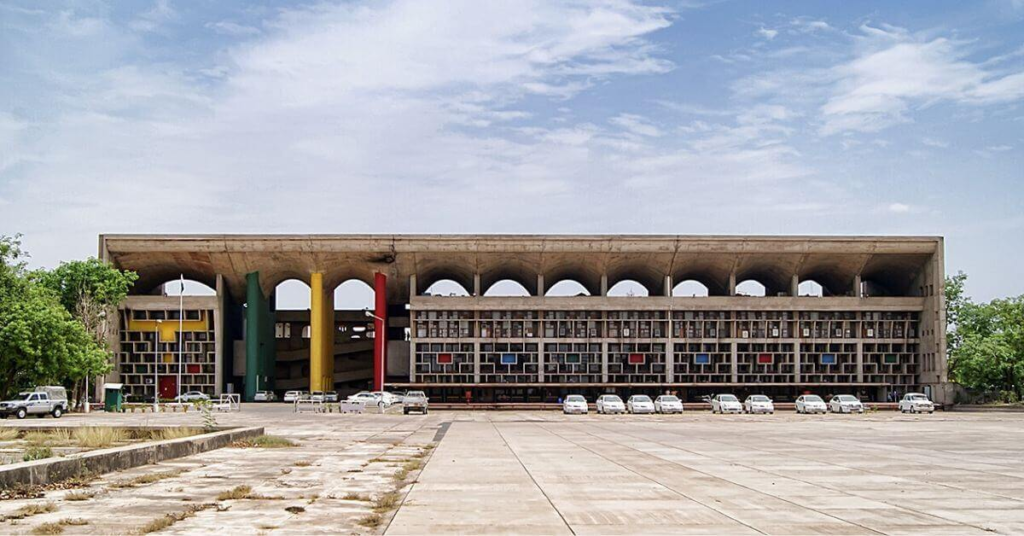
The proposal has now been formally forwarded to the Foundation Le Corbusier in Paris through the Government of India, in line with directions issued by the Punjab and Haryana High Court.
Heritage Panel Meeting Gives Green Signal
CHCC Reviews Heritage-Sensitive Development Plan
The decision was taken during a meeting of the CHCC chaired by Chandigarh Chief Secretary H. Rajesh Prasad. Officials confirmed that the proposal was examined in detail and subsequently cleared, subject to strict compliance with national and international heritage norms.
During the meeting, Rajiv Kumar Mehta, Chief Architect-cum-Member Convener of the committee, presented an overview of the holistic development plan. He briefed members on the progress made so far, legal proceedings related to the matter, and the steps taken in compliance with judicial directions.
Consultant Presents Conceptual Expansion Design
Focus on UNESCO Norms and Heritage Protection
The committee was informed that, as directed by the High Court, a professional consultant had been appointed to prepare conceptual designs for the proposed expansion. The consultancy firm M/s Design Associates, Noida, showcased detailed proposals during the meeting.
The presentation highlighted:
- Heritage-sensitive architectural planning
- Protection of the site’s Outstanding Universal Value
- Compliance with ICOMOS guidelines
- Integration of open spaces, green zones, and infrastructure upgrades
Officials emphasized that the expansion would be designed in a manner that does not compromise the historic and architectural integrity of the Capitol Complex.
Strict Conditions Emphasised by Committee Members
Heritage Impact and Environmental Clearances Mandatory
Members of the CHCC underlined the importance of preserving the sanctity of the Capitol Complex, which is globally recognized for its architectural significance. They stressed that:
- A Heritage Impact Assessment would be mandatory
- All required environmental clearances must be obtained
- Every stage of the project must strictly follow UNESCO World Heritage norms
Authorities assured the committee that no construction activity would commence without securing all statutory approvals and heritage permissions.
Why International Approval Is Crucial
UNESCO World Heritage Status Brings Global Oversight
The Punjab and Haryana High Court building, designed by legendary architect Le Corbusier, is part of the Capitol Complex that enjoys UNESCO World Heritage Site status. Due to this designation, any development in or around the complex must be referred to international heritage bodies.
As per Clause 172 of the Operational Guidelines for the Implementation of the World Heritage Convention, all proposed interventions must be submitted for advisory review. In this context, the concept note for the High Court expansion has been sent to the Foundation Le Corbusier for evaluation.
High Court Had Directed Immediate Action
Two Expansion Options Already Prepared
In earlier hearings, the Punjab and Haryana High Court had directed the Chandigarh Administration to place a concept note before the Centre proposing additional construction to address growing infrastructural needs.
Officials informed the court that two alternative proposals had been prepared:
- One proposing 20.5 lakh square feet of additional construction
- Another proposing 19.8 lakh square feet
Both options aim to balance functional expansion with heritage conservation.
A Delicate Balance Between Growth and Preservation
The proposed expansion seeks to address the increasing workload and space constraints of one of North India’s most important constitutional courts. At the same time, it reflects the challenge of modern development within a globally protected heritage zone.
With the heritage panel’s approval now in place, the project enters a critical international review phase. The final outcome will depend on feedback from global heritage authorities, ensuring that Chandigarh’s architectural legacy remains intact while meeting contemporary judicial needs.