
Youth represents the most dynamic and productive segment of any society. Their energy, creativity, and aspirations shape the future of a nation. However, in recent years, career confusion among young people has emerged as a serious social concern. Despite increased access to education and information, many young individuals struggle to make informed career choices. This confusion not only affects their personal growth but also has wider social and economic consequences.
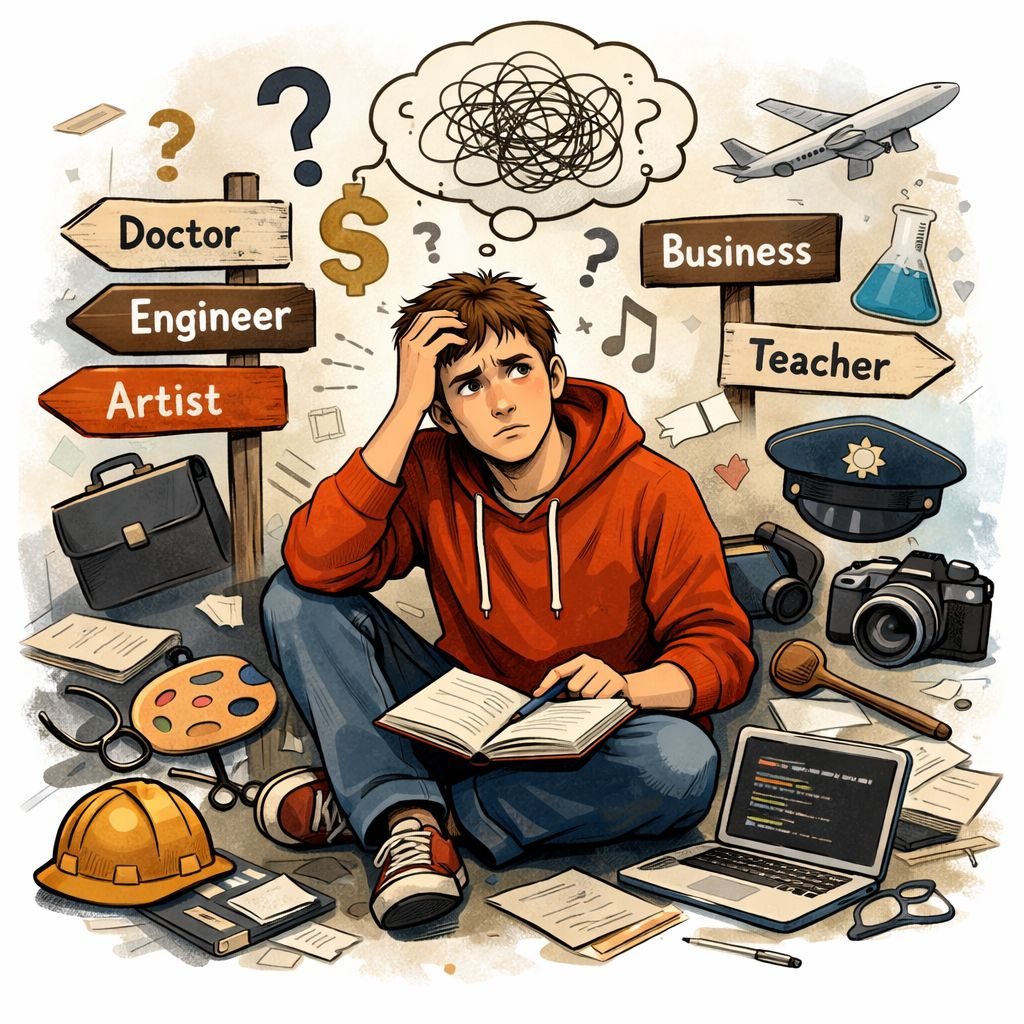
Career confusion refers to uncertainty, indecision, and lack of clarity regarding career goals and professional direction. It often begins during school years and continues into higher education and early employment. Several interconnected factors contribute to this growing problem.
One of the primary causes of career confusion is societal pressure. In many families, certain professions such as medicine, engineering, law, or government services are considered superior. Parents, often driven by concern for financial security and social status, impose their expectations on children. As a result, many students pursue careers that do not align with their interests or abilities, leading to dissatisfaction and stress.
Another major factor is lack of proper career guidance. Many educational institutions focus mainly on academic performance and examinations, while career counselling remains neglected. Students are rarely exposed to information about diverse career options, emerging fields, or skill-based professions. Without guidance, young people rely on peer influence, social media trends, or incomplete information when making career decisions.
Rapid changes in the job market have further intensified confusion. Technological advancements, automation, and globalization have transformed traditional career paths. New professions are emerging, while some conventional jobs are becoming obsolete. This fast-changing environment makes it difficult for youth to predict stable career options, increasing uncertainty and fear of making wrong choices.
The education system also plays a significant role in career confusion. Excessive emphasis on theoretical knowledge, marks, and degrees often ignores individual talents and practical skills. Many students complete their education only to realise that they lack employable skills. This mismatch between education and employment creates frustration and loss of confidence.
Economic factors contribute as well. Rising unemployment, contractual jobs, and job insecurity make young people anxious about their future. Many feel compelled to choose careers based solely on income potential rather than passion or aptitude. Financial constraints further limit access to quality education, coaching, and professional guidance.
Career confusion has serious psychological consequences. Uncertainty about the future often leads to stress, anxiety, depression, and low self-esteem. Continuous comparison with peers, especially through social media, worsens emotional pressure. Youth may feel like failures if they do not achieve success within socially defined timelines.
The impact of career confusion extends beyond individuals. When young people are unable to utilise their potential effectively, society loses valuable human resources. Misdirected careers result in low productivity, job dissatisfaction, and frequent career changes, which affect economic development.
Addressing career confusion requires collective effort. Career guidance should be integrated into the education system from an early stage. Schools and colleges must provide counselling services, aptitude assessments, and exposure to various career paths. Interaction with professionals, internships, and skill-based learning can help students understand real-world opportunities.
Parents also have an important role to play. Instead of imposing choices, they should support children in exploring their interests and strengths. Open communication, emotional support, and respect for individuality can help youth make confident decisions.
At the individual level, self-awareness is crucial. Youth should be encouraged to identify their interests, skills, and values. Continuous learning, flexibility, and openness to change are essential in today’s dynamic job market. Career paths are no longer linear, and changing directions should not be seen as failure.
Government and private institutions must also collaborate to strengthen career counselling infrastructure and promote skill-based education. Awareness campaigns about emerging careers and entrepreneurship can reduce dependency on traditional professions.
In conclusion, career confusion among youth is a complex issue rooted in social expectations, educational limitations, and economic uncertainty. Addressing it requires systemic reform, parental support, and informed guidance. When young people are empowered to make thoughtful career choices, they not only secure their own future but also contribute meaningfully to national development.
Name: Kiranjeet Kaur
Profession: Advocate
Contact No.: 7009197871