

At least 13 people were killed and more than 30 injured after hundreds of protesters stormed the United States Consulate in Karachi on Sunday, unleashing one of the deadliest anti-American demonstrations in Pakistan in recent years. The violence erupted hours after reports emerged that Iran’s Supreme Leader, Ayatollah Ali Khamenei, had been killed in coordinated US–Israeli airstrikes.
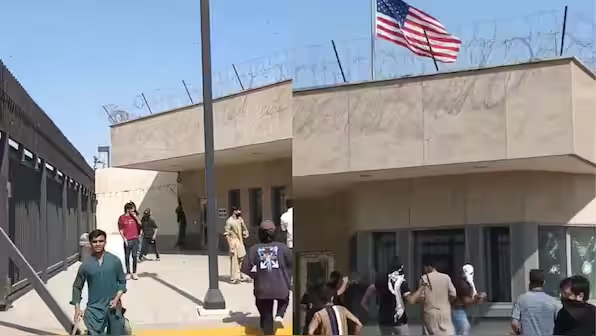
Anger spread rapidly through Karachi’s streets as crowds gathered near the diplomatic enclave. Witnesses said protesters breached the outer wall of the consulate compound, with some climbing over the main gate and entering the driveway. Windows were smashed, parts of the premises were set on fire, and clashes broke out between demonstrators and security personnel.
Police responded with tear gas and baton charges to disperse the crowd. Rangers and additional paramilitary forces were deployed to regain control of the situation. A senior police official confirmed casualties during the confrontation, while rescue services later reported that 13 people had died and dozens were receiving treatment for injuries, some in critical condition.
The unrest caused severe traffic disruption in surrounding districts. Authorities sealed major roads leading to the diplomatic zone, including the route from Sultanabad toward Mai Kolachi, triggering long traffic jams. Karachi Traffic Police diverted vehicles as security operations continued late into the evening.
The shockwaves extended beyond Karachi. In Skardu, in Pakistan’s Gilgit-Baltistan region, protesters reportedly set fire to a United Nations office building. Local officials confirmed property damage but said no casualties were recorded there. Demonstrations were also reported outside the Green Zone in Baghdad, where protesters gathered near the US Embassy, raising slogans against Washington and Tel Aviv.
The Israeli military described the strike that killed Khamenei as part of “Operation Roaring Lion,” a coordinated mission carried out alongside American forces. Officials said the action targeted what they described as emerging threats. The operation has sharply escalated tensions across the Middle East and sparked widespread outrage among Iran’s supporters.
Iran has declared 40 days of national mourning following Khamenei’s death. Flags are flying at half-mast across the country, and large public gatherings are planned to honor the leader who shaped Iran’s political direction for more than three decades. Khamenei, who succeeded Ruhollah Khomeini in 1989, remained the most powerful authority in Iran until his reported assassination.
Pakistan now finds itself in a delicate position. The country maintains complex diplomatic ties with both the United States and neighboring Iran. Sunday’s violence highlights how quickly regional geopolitical tensions can ignite domestic unrest. Authorities have appealed for calm and launched investigations to identify those responsible for breaching the consulate and damaging property.
As regional tensions continue to intensify, security remains on high alert in Karachi and other sensitive locations. The deadly protest underscores the widening fallout of the US–Israel strikes and signals that the repercussions of Khamenei’s killing are likely to reverberate far beyond Iran’s borders.
Key Highlights:
13 killed and over 30 injured in Karachi; protesters breached US Consulate compound; police used tear gas and force to disperse crowds; UN office building torched in Skardu; Iran announces 40-day national mourning; regional tensions continue to escalate.