

Veteran Congress leader Mani Shankar Aiyar has once again stirred political debate within his own party, delivering a series of pointed remarks that have triggered fresh tensions. Speaking at a recent seminar in New Delhi, Aiyar openly criticized several Congress colleagues, questioned the party’s electoral prospects in Kerala, and even praised the state’s Left leadership.
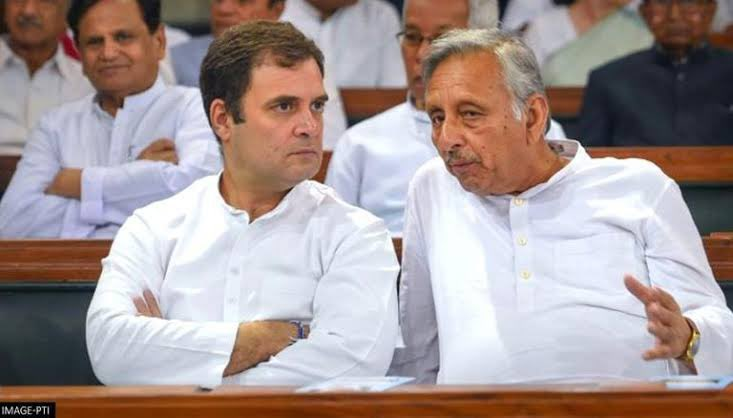
Aiyar took direct aim at four-time Thiruvananthapuram MP Shashi Tharoor, suggesting that the senior leader harbors ambitions of becoming India’s next foreign minister. Referring to Tharoor’s firm stand on issues such as Operation Sindoor, Aiyar described him as “anti-Pakistan” and implied that his foreign policy positioning reflects larger aspirations. The comment appeared to hint at internal differences over both ideology and leadership ambitions within the Congress.
Observers note that Tharoor has often taken independent positions on national and international matters, occasionally putting him at odds with sections of the party leadership. Aiyar’s remarks, therefore, are being viewed not just as personal criticism but as a reflection of deeper currents within the Congress about its direction and future leadership.
The veteran leader did not stop there. He labeled party spokesperson Pawan Khera a “puppet” and questioned the Congress’ ability to project strong communication. Aiyar said that if the party cannot find anyone other than Khera to serve as spokesperson, it explains its current condition. The remark drew an immediate response from Khera, who clarified on social media platform X that Aiyar has had no formal connection with the Congress in recent years and speaks purely in his personal capacity.
The controversy grew sharper when Aiyar turned to Kerala politics. He predicted that the Congress would struggle in the upcoming Assembly elections, remarking that party leaders in the state “hate each other more than they hate the Communists.” His blunt assessment exposed internal frictions that critics say have affected the party’s unity in the state.
At the same seminar, Aiyar openly praised Kerala Chief Minister Pinarayi Vijayan and lauded the state’s performance in strengthening Panchayati Raj institutions. He credited Kerala with carrying forward the grassroots governance vision of former Prime Minister Rajiv Gandhi. In a dramatic statement, Aiyar said he would “fall at your feet” and request Vijayan to “pick up the baton that the Congress has dropped.” His remarks came despite reports that sections of the state Congress leadership had discouraged participation in the seminar.
Senior Congress leader Jairam Ramesh responded by asserting that Kerala voters would bring the Congress-led UDF back to power. He also alleged that the Left Democratic Front and the BJP operate as covert partners, underscoring the high-stakes political contest in the state.
Aiyar’s comments have once again highlighted the ideological and strategic debates simmering within the Congress. Public disagreements between senior leaders risk complicating the party’s messaging at a time when electoral unity is crucial. Yet they also reveal an ongoing internal churn about leadership style, communication strategy, and regional alliances.
As the Kerala Assembly elections approach, the Congress faces the twin challenge of countering its political rivals while managing internal differences. Whether Aiyar’s remarks will fade as another episode of political candor or leave a deeper mark on party cohesion remains uncertain. For now, his words have placed the Congress’ internal dynamics firmly back in the national spotlight.