

Medical insurance was created to protect families from financial disaster during health emergencies. For millions of Indians, it is supposed to be a safety net that ensures treatment without fear of losing life savings. Yet across the country, that promise is quietly collapsing. Patients, especially from the middle class, are increasingly finding themselves trapped between powerful insurance companies and large private hospitals, with no one truly on their side.
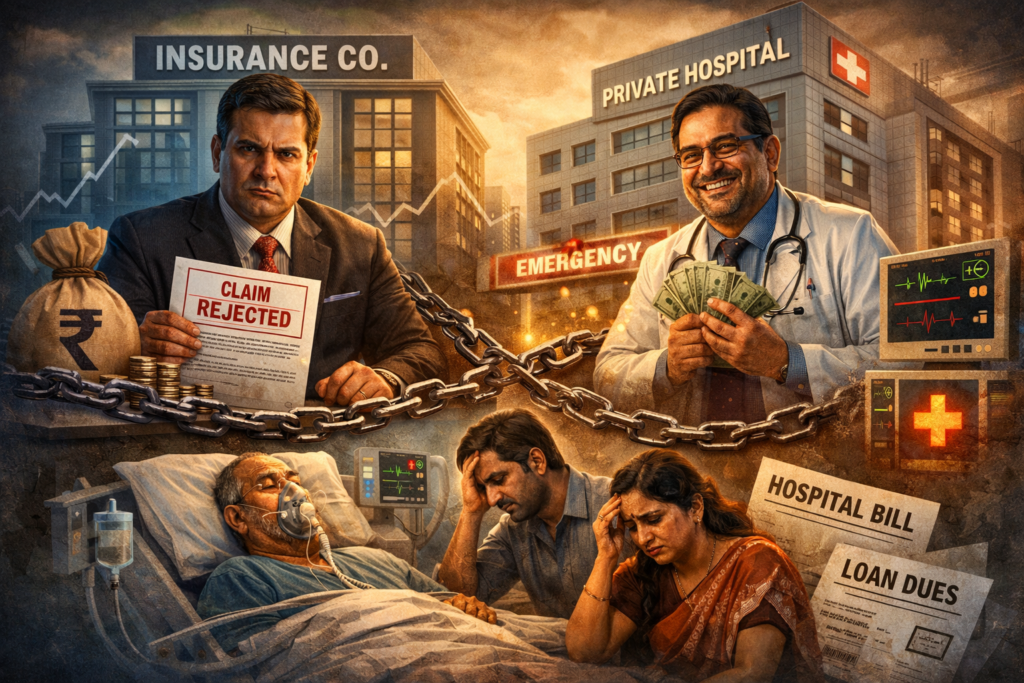
In hospitals across India, a disturbing pattern is being reported. The moment a patient discloses that they are covered by medical insurance, the cost of treatment often rises sharply. More tests are ordered, more procedures are advised, and longer hospital stays suddenly become “medically necessary.” Families say that if they had chosen to pay in cash, the treatment would have been simpler, shorter, and significantly cheaper.
This growing distrust has led to serious allegations of a hidden nexus between insurers and hospital administrators. Hospitals benefit from higher bills because insurance companies cover a large portion of the amount. Insurers, on the other hand, later use complicated policy conditions to reduce or deny claims. In the end, it is the patient who pays the price — both financially and emotionally.
After discharge, families are frequently shocked to learn that many treatments have been labeled “non-admissible,” “outside policy limits,” or “not medically justified.” By the time they receive the final settlement, a large part of the hospital bill must still be paid out of pocket. For families who have paid premiums for years, this feels like betrayal rather than protection.
The irony is that many patients now believe having insurance puts them at a disadvantage. Those who pay directly often face fewer tests, fewer charges, and quicker discharge. Insured patients, meanwhile, are seen as an opportunity for higher billing. This perception is spreading fast, shaking public confidence in the entire healthcare financing system.
ALSO READ: Iran Protests Turn Deadly as Economic Crisis Sparks Nationwide Unrest
Medical emergencies are now one of the leading reasons Indian families fall into debt. A single hospital stay can wipe out savings built over decades. Even people with insurance are being forced to sell assets, take loans, or rely on relatives to survive a health crisis. What was meant to provide relief is instead deepening financial stress.
Regulatory oversight remains weak. Hospital billing is rarely transparent, and insurance claim processes are slow and complex. Patients are often too ill, too tired, or too confused to fight back. Complaints take months, sometimes years, to resolve, while hospitals and insurers continue to operate without meaningful accountability.
Healthcare experts warn that unless urgent reforms are introduced, public trust in medical insurance will collapse. They are calling for standardized hospital pricing, real-time digital billing, strict audits, and faster claim dispute mechanisms. Above all, they stress that the healthcare system must serve patients, not profit networks.
For ordinary citizens, the message is becoming painfully clear. When illness strikes, the battle is no longer just against disease — it is also against a system that too often treats patients as business opportunities rather than human beings.