

Union Commerce and Industry Minister Piyush Goyal on Thursday firmly rejected Rahul Gandhi’s allegation that Bangladesh has secured more favourable tariff concessions from the United States than India. Calling the claim misleading, Goyal asserted that India will receive identical benefits under the proposed interim trade arrangement currently being negotiated with Washington.
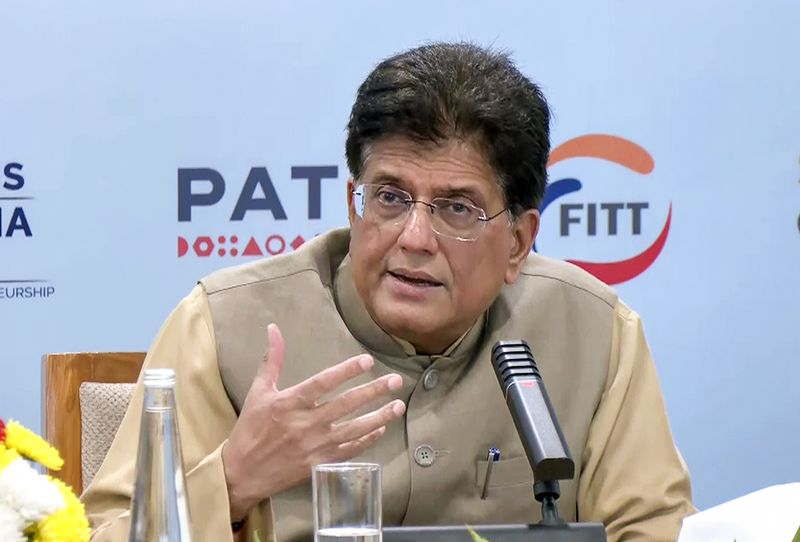
The controversy erupted after the Leader of Opposition suggested that Dhaka had gained an advantage in trade terms with the US, particularly in the textiles sector. Responding sharply, Goyal said India would enjoy the same zero reciprocal tariff facility that Bangladesh currently benefits from.
He explained that Bangladesh’s arrangement allows exporters to avail zero reciprocal tariff if raw material is sourced from the United States, processed into finished goods such as textiles, and then exported. According to the minister, India will have access to the same mechanism once the interim trade agreement is finalized. He added that the framework is still under preparation and that the full details will become clear once the fine print is released.
The minister projected the proposed arrangement as a major boost to Indian exports. He said that India’s export volume, currently around ₹5 lakh crore, could potentially rise to ₹10 lakh crore if expanded access to key markets materializes. He emphasized that farmers, MSMEs, fishermen, and traditional artisans would directly benefit from enhanced trade opportunities in the United States, the European Union, the United Kingdom, Switzerland, Norway, and Australia.
However, the Congress mounted a counterattack within hours. Party leader Pawan Khera argued that incentivizing the use of American raw material under a zero tariff mechanism could hurt Indian cotton farmers. He suggested that manufacturers might shift toward importing US cotton to qualify for concessions, potentially reducing demand for domestic produce. The Opposition framed the issue as a risk to self-reliance and rural livelihoods.
The debate highlights growing political sensitivity surrounding the interim India–US trade agreement. The textiles and agriculture sectors, both economically significant and politically influential, sit at the heart of the controversy. While the government presents the deal as a pathway to stronger export growth and global competitiveness, critics warn of unintended consequences for domestic producers.
Several critical aspects of the agreement remain under negotiation. These include rules of origin that determine product eligibility, value addition thresholds to prevent misuse of concessions, and clarity on which sectors will be covered under the zero reciprocal tariff structure. Until these elements are finalized, both sides are likely to continue pressing their case.
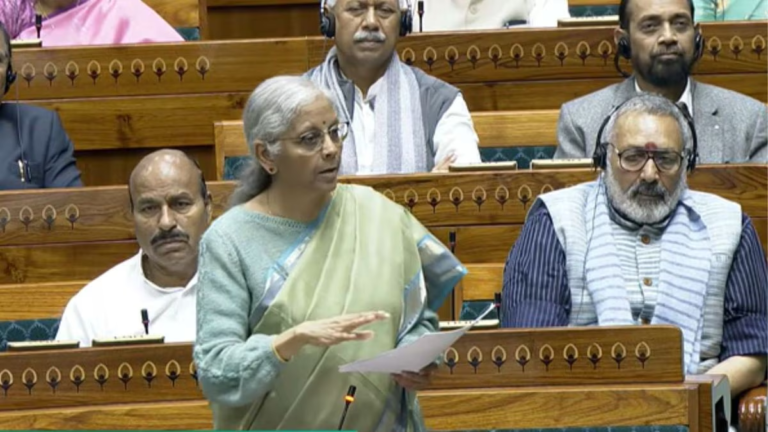
The exchange underscores a broader national conversation about balancing global trade expansion with protection of domestic industries. For the government, the interim agreement represents opportunity and economic growth. For the Opposition, it raises questions about sourcing patterns and the future of Indian cotton farmers.
With negotiations still underway, the final contours of the agreement will determine whether the proposed tariff framework strengthens India’s export position without undermining its domestic producers. For now, the political debate remains as intense as the trade talks themselves.