

India has once again asserted its sovereignty over the Shaksgam Valley, rejecting China’s claim that the strategically important region belongs to Beijing. New Delhi has clearly stated that it does not recognise the 1963 boundary agreement between Pakistan and China and considers all activities carried out under it to be illegal.
The response came after China’s Foreign Ministry spokesperson Mao Ning claimed that the Shaksgam Valley falls within Chinese territory. Her statement prompted a strong and immediate rebuttal from Indian authorities, who said China has no legal right over the area.
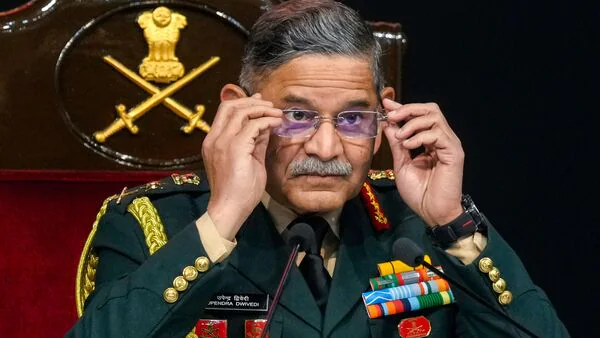
Chief of Army Staff General Upendra Dwivedi addressed the issue during a press briefing, where he reiterated that India does not accept the so-called 1963 agreement. He said the deal has no legal validity and does not change India’s claim over the territory. The Army Chief also made it clear that India rejects all construction and infrastructure development taking place in the region, including projects under the China-Pakistan Economic Corridor.
According to him, the CPEC passes through Indian territory that is under the illegal occupation of Pakistan, making the entire project unacceptable to India. He stressed that any activity by China or Pakistan in the Shaksgam Valley violates India’s sovereignty.
The Ministry of External Affairs also reinforced India’s position, saying that the Shaksgam Valley is an inseparable part of India. The government stated that it has never recognised the Pakistan-China boundary agreement of 1963 and continues to oppose any attempts to change the status of the region.
The MEA further clarified that the Union Territories of Jammu and Kashmir and Ladakh are integral parts of India and this position has been conveyed to both China and Pakistan on several occasions. India has consistently lodged protests with Beijing over infrastructure development in the valley and has reserved the right to take all necessary measures to protect its territorial integrity.
China, however, defended its actions by referring to the 1963 border agreement with Pakistan, claiming that it was signed by two sovereign nations and therefore remains valid. Mao Ning also argued that infrastructure work under CPEC is being carried out on Chinese territory and does not affect China’s position on the Kashmir issue.
Despite China’s claims, India maintains that any agreement between Pakistan and China over Indian territory has no legal standing. New Delhi continues to regard the entire region, including the Shaksgam Valley, as part of India.
The Shaksgam Valley is located in a highly sensitive and strategic area. It borders China’s Xinjiang region to the north, Pakistan-occupied Jammu and Kashmir to the south and west, and the Siachen Glacier to the east. Its location makes it crucial for regional security and geopolitical balance in the Himalayas.
The growing dispute highlights rising tensions between India and China over border issues and large-scale infrastructure projects in disputed territories. India believes that China’s expanding presence through CPEC and related projects is an attempt to alter ground realities in the region, while Beijing insists it is acting within its legal rights.
With diplomatic, military, and strategic interests involved, the Shaksgam Valley continues to remain one of the most sensitive flashpoints between India and China in the region.