

India has cleared one of the largest defence procurement packages in its history, approving military projects worth nearly Rs 3.6 lakh crore. At the centre of the decision is the purchase of 114 additional Rafale fighter jets, a move that significantly strengthens the Indian Air Force and reinforces India’s long-term strategic posture.
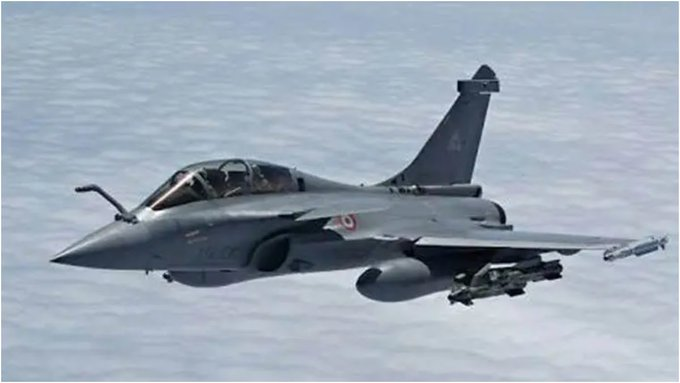
The Defence Acquisition Council (DAC), chaired by Defence Minister Rajnath Singh, granted the crucial Acceptance of Necessity (AoN), marking the first formal step in the acquisition process. The proposal will now move to the Cabinet Committee on Security, led by Prime Minister Narendra Modi, for final approval. Officials expect momentum to build as Prime Minister Modi and French President Emmanuel Macron prepare to meet in India from February 17 to 19, where both sides are looking to seal the agreement.
The Indian Air Force had formally pushed for the 114 Rafale jets last year as part of its broader modernization plan. The IAF currently operates 36 Rafales, while the Indian Navy has ordered 26 marine variants. Expanding the fleet will not only boost combat strength but also reduce long-term maintenance costs and improve operational efficiency. With infrastructure already established at Ambala, including a training and Maintenance, Repair and Overhaul facility, the Air Force is well positioned to induct additional squadrons quickly.
Unlike the earlier government-to-government purchase of 36 jets, this deal will come under the Make in India initiative. French aerospace major Dassault Aviation will partner with an Indian firm to manufacture the aircraft domestically. Indigenous content is expected to reach between 55 and 60 percent after transfer of technology for airframes, engines, and avionics. Safran and Thales, key suppliers for engines and electronic systems, will also participate in the technology transfer process. The jets will integrate Indian weapons and secure data links, allowing seamless coordination with Indian radar and sensor networks.
Alongside the Rafale expansion, India has also approved the procurement of six additional Boeing P8I long-range maritime surveillance aircraft for the Navy. The Navy already operates 12 of these aircraft, which have played a crucial role in anti-submarine warfare and maritime surveillance operations. During heightened tensions along the Line of Actual Control and during Operation Sindoor in May, the P8I fleet provided vital aerial monitoring. The additional aircraft will enhance India’s maritime dominance, especially in the strategically sensitive Indian Ocean Region.
The DAC has also cleared the acquisition of High Altitude Pseudo Satellites, or HAPS. These advanced unmanned systems operate at altitudes of around 20 kilometres, far above commercial aircraft routes. They can remain airborne for extended periods, providing persistent intelligence, surveillance, reconnaissance, electronic intelligence, telecommunications, and remote sensing. Compared to satellites, HAPS platforms are significantly more cost-effective and do not require rocket launches, making them a strategic and economic advantage.
The broader defence package includes the procurement of Scalp long-range precision missiles, upgrades and overhaul of T-72 tanks and BMP-II infantry combat vehicles, as well as anti-tank mines. The Scalp missiles, known for their deep strike accuracy, will further enhance India’s stand-off attack capability.
This sweeping approval comes at a time when regional security dynamics remain complex. China’s continued military activity along the northern borders and Pakistan’s ongoing defence upgrades have pushed India to accelerate modernization efforts. By expanding its Rafale fleet, strengthening maritime surveillance, and investing in high-altitude intelligence platforms, India is sending a clear message about its commitment to preparedness and deterrence.
With nearly Rs 3.6 lakh crore committed, the government has signalled that defence readiness remains a top national priority. If final clearance comes during the upcoming Modi-Macron meeting, the Rafale deal could become one of the most significant milestones in India-France defence cooperation and reshape India’s air power capabilities for decades to come.