

Indian households will now have to pay more for cooking gas after oil marketing companies increased the domestic LPG cylinder price by ₹60, taking the new rate to ₹913 per 14.2-kg cylinder in Delhi.
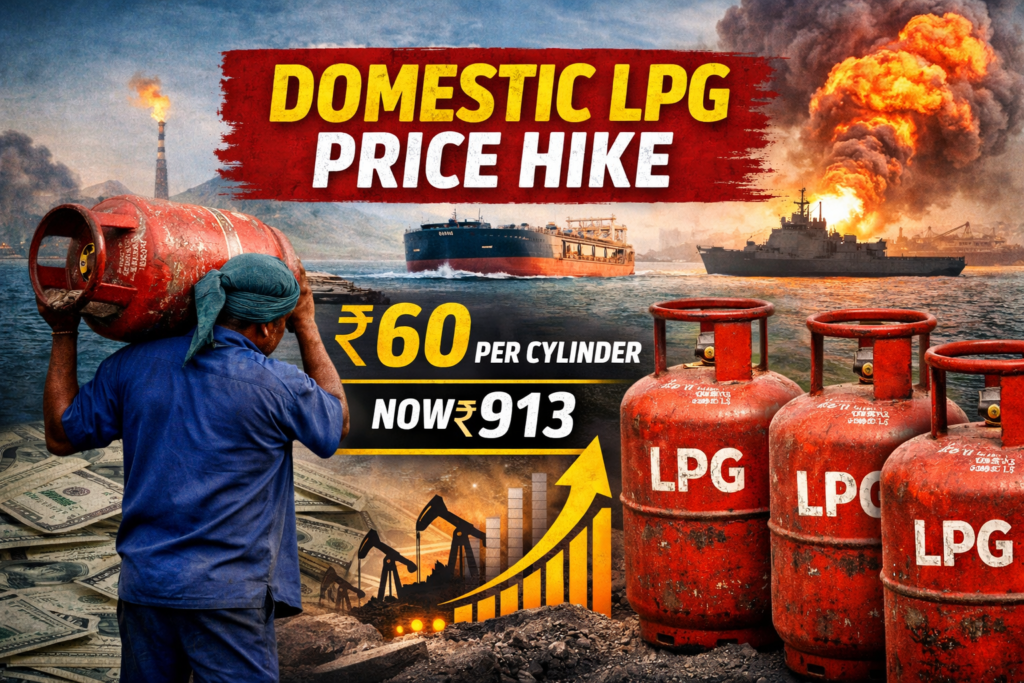
The revised price came into effect from March 7, according to data released by Indian Oil Corporation (IOC). The increase comes amid a sharp rise in global energy prices triggered by escalating tensions in the West Asia region.
This is the second hike in LPG prices in less than a year, following a ₹50 increase in April 2025.
New LPG Prices in Major Indian Cities
After the latest revision, LPG prices vary slightly across cities due to local taxes and transportation costs.
| City | New LPG Price |
|---|---|
| Delhi | ₹913 |
| Mumbai | ₹912.50 |
| Kolkata | ₹939 |
| Chennai | ₹928.50 |
These prices apply to non-subsidised LPG cylinders used by most households.
Impact on Ujjwala Yojana Beneficiaries
The increase will also impact beneficiaries of the Pradhan Mantri Ujjwala Yojana. More than 10 crore low-income households that received free LPG connections under the scheme will face the same ₹60 increase. However, they continue to receive a subsidy of ₹300 per cylinder for up to 12 refills annually. After accounting for this subsidy, Ujjwala beneficiaries will now pay about ₹613 for each cylinder.
Commercial LPG Becomes Costlier Too
Commercial LPG cylinders used by hotels, restaurants and other establishments have also become costlier. The price of a 19-kg commercial cylinder has been raised by ₹114.50, pushing the new rate in Delhi to ₹1,883. This comes just days after a ₹28 increase implemented on March 1, taking the total rise in commercial LPG prices this year to over ₹300.
Industry officials say the latest price hike is largely driven by the sharp surge in global energy prices following escalating tensions in West Asia. The situation intensified after the United States and Israel carried out military strikes on Iran, triggering retaliatory actions from Tehran. The conflict has disrupted shipping routes and created uncertainty in global oil and gas markets.
One of the biggest concerns is the slowdown in tanker movement through the Strait of Hormuz, a narrow but extremely important sea passage located between Iran and Oman. The strait is one of the world’s most critical energy transit routes, used by Middle Eastern producers to ship crude oil, natural gas and LPG to international markets. Any disruption in this corridor immediately affects global fuel prices.
The geopolitical tension has already pushed global crude prices sharply higher. US crude surged by more than 35 percent during the week, reaching around $90.90 per barrel. Brent crude also recorded a major jump of about 28 percent to settle near $92.69 per barrel. At the same time, Asian spot prices for liquefied natural gas climbed to about $25.40 per million British thermal units, the highest level in three years.
These developments have tightened the global LPG market as well. Shipments of propane and butane from key Gulf exporters have faced logistical challenges, raising concerns about supply availability for major importing countries like India.
India depends heavily on imports to meet its LPG demand. During the 2024–25 financial year, the country consumed around 31.3 million tonnes of LPG, while domestic production stood at only 12.8 million tonnes. The remaining demand was met through imports, and nearly 85 to 90 percent of these shipments come from Gulf countries such as Saudi Arabia. Most of these supplies pass through the Strait of Hormuz, making the route extremely important for India’s energy security.

To prevent any potential supply shortage, the government has already started taking precautionary measures. Authorities recently invoked emergency provisions to direct domestic oil refineries to increase LPG production. The step aims to strengthen local supply and reduce the impact of possible disruptions in global shipments.
Despite the latest increase, industry officials say cooking gas prices in India remain comparatively lower than those in several neighbouring countries due to government subsidies and pricing controls. However, experts warn that if tensions in the Middle East continue and global oil prices remain elevated, domestic fuel prices may face further pressure in the coming months.
Summary – Key Highlights
Domestic LPG price increased by ₹60 per cylinder, taking the new price in Delhi to ₹913. The hike affects both regular consumers and Ujjwala Yojana beneficiaries, who will now pay around ₹613 after subsidy. Commercial LPG cylinders have also become costlier, with the price rising to ₹1,883 in Delhi. The increase comes amid a sharp surge in global oil and gas prices triggered by the West Asia conflict and disruptions to tanker movement through the Strait of Hormuz, a key energy supply route for India.