

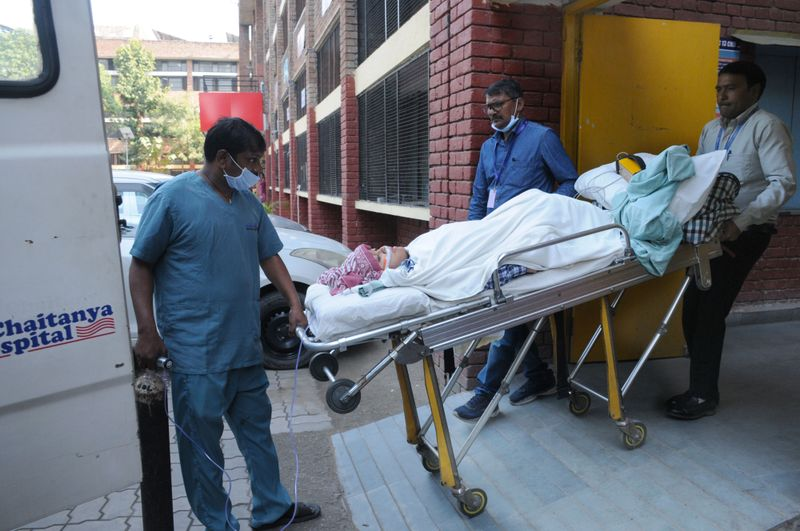
In an extraordinary show of resilience, a Class XII student battling muscular dystrophy since birth reached her board examination centre in an ambulance in Chandigarh on Friday to appear for her CBSE Physics paper. Despite deteriorating health over the past 20 days and continuous oxygen support, she refused to miss the examination she had prepared for all year. Her determination moved school authorities, students, and medical staff alike, turning a routine exam day into a powerful story of courage.
What Happened
The student, Kanishka, arrived at Government Model Senior Secondary School, Sector 13, Manimajra, accompanied by doctors and equipped with an oxygen cylinder. She has been living with muscular dystrophy, a genetic condition that causes progressive muscle weakness, since birth.
Due to her fragile health condition, she was transported in an ambulance directly to the examination centre. Over the past three weeks, her medical condition had reportedly worsened, but she remained firm in her decision to sit for the Physics board examination conducted by the Central Board of Secondary Education.
School authorities, in coordination with CBSE’s city officials, arranged a ground-floor examination room to ensure easy access for medical personnel and emergency equipment. She was granted 20 minutes of extra time per hour, amounting to an additional hour for the three-hour paper, as per CBSE guidelines for students with special medical needs.
Teachers described her as calm and composed throughout the exam. After completing her paper, she expressed determination to appear in her remaining four examinations.
Why It Matters Locally
For Chandigarh and its surrounding regions — Punjab and Haryana — this incident goes beyond a single student’s courage. It highlights broader issues around:
- Accessibility in educational institutions
- Implementation of inclusive education policies
- Medical emergency preparedness in schools
- Awareness about rare genetic disorders
Chandigarh has long prided itself on educational standards and infrastructure. However, stories like these expose the gaps that still exist for differently-abled students.
In recent years, the Union Territory administration has taken steps to make government schools more inclusive. Ramps, ground-floor exam halls, and special concessions have become more structured under CBSE norms. Yet, many private institutions in Punjab and Haryana still struggle with full compliance regarding disability-friendly infrastructure.
Kanishka’s story has reignited discussions among parents and educators about whether examination systems are sufficiently flexible for students with severe medical conditions.
Background & Timeline
Understanding Muscular Dystrophy
Muscular dystrophy is a group of inherited disorders that cause muscle degeneration and weakness over time. The condition progressively affects mobility, respiratory muscles, and in severe cases, the ability to perform daily tasks independently.
In India, awareness about muscular dystrophy remains limited, especially outside metropolitan cities. Many families in Punjab and Haryana face challenges in early diagnosis and access to specialized care.
Timeline of Events
- Since Birth: Kanishka diagnosed with muscular dystrophy
- Past 1 Year: Prepared for CBSE Class XII board exams
- Last 20 Days: Significant health decline reported
- Exam Day (February 21, 2026): Transported in ambulance to exam centre
- Post-Exam: Successfully completed Physics paper
Her family confirmed she intends to appear for the remaining subjects, subject to medical stability.
Official Statements
The Principal of GMSSS stated that all arrangements were made smoothly under CBSE’s special provisions.
“We ensured she was comfortable and had all necessary support. As per CBSE norms for students with special medical needs, she was granted 20 minutes extra per hour.”
Officials emphasized that the process was conducted under guidance from the city coordinator and in compliance with CBSE’s circulars on inclusive examination practices.
CBSE guidelines allow:
- Extra time
- Scribe facility (if required)
- Separate seating arrangements
- Exemption from certain practical components (in specific cases)
In this case, no scribe was required as she was able to write independently.
Expert & Public Reaction
Medical Experts
City-based neurologists say muscular dystrophy patients often struggle with stamina and respiratory support during stressful situations like examinations.
A Chandigarh-based pediatric neurologist (name withheld) told The Chandigarh News:
“For a patient dependent on oxygen support, sitting for a three-hour exam requires immense physical and mental endurance. This shows remarkable psychological resilience.”
Education Experts
Education policy analysts believe this incident strengthens the argument for digital and flexible assessment models.
- Hybrid exam options
- Medical-supervised home-based exams
- Increased digital evaluation frameworks
These discussions are gaining momentum post-pandemic but remain inconsistently implemented.
Public Sentiment
On social media, residents across Chandigarh, Mohali, and Panchkula have praised her courage. Parents of differently-abled children say her story brings hope and pushes authorities to improve accessibility standards.
Key Facts at a Glance
- Student battling muscular dystrophy since birth
- Transported to exam centre via ambulance
- Appeared for CBSE Class XII Physics exam
- Provided oxygen support during exam
- Granted 20 minutes extra per hour
- Ground-floor special room arranged
- Plans to appear for four remaining papers
Comparison With Previous Years
While cases of students appearing for exams despite illness are not new, incidents involving ambulance transport remain rare in the Chandigarh region.
In previous years:
- 2023: A student in Punjab appeared for exams while recovering from surgery
- 2024: Haryana allowed home-centre exam arrangement for a cancer patient
- 2025: Chandigarh UT expanded inclusive seating policies
However, this case stands out due to the severity of the medical condition and the need for continuous oxygen support.
Government Policy Impact
India’s Rights of Persons with Disabilities Act, 2016 mandates inclusive education. Under this framework:
- Schools must ensure barrier-free access
- Examination bodies must provide accommodations
- Equal opportunity in education is a legal right
CBSE has issued periodic circulars expanding concessions for students with benchmark disabilities. However, implementation often depends on proactive school administration.
Chandigarh administration officials have indicated that they will continue to strengthen inclusive infrastructure across government schools.
What Happens Next?
The immediate focus remains on Kanishka’s health and her upcoming examinations.
Possible developments include:
- Medical review before each exam
- Continued ambulance transport if required
- Additional CBSE concessions if health worsens
Long-term, this incident may:
- Trigger accessibility audits in Chandigarh schools
- Encourage policy debate on remote examination alternatives
- Increase awareness about muscular dystrophy in the region
Her story may also inspire NGOs to collaborate with schools to provide better disability support systems.
Frequently Asked Questions (FAQs)
1. What medical condition does the student have?
She has muscular dystrophy, a genetic disorder causing progressive muscle weakness.
2. Was special permission required from CBSE?
Yes, arrangements were made under CBSE norms for students with special medical needs.
3. How much extra time was given?
She received 20 minutes extra per hour, totaling an additional hour.
4. Are such facilities common in Chandigarh schools?
Government schools generally comply with CBSE guidelines, but implementation varies across institutions.
5. Will she appear for remaining exams?
According to her family, she intends to appear for the remaining four papers.