

Dark Web Child Exploitation Case: In a landmark judgment that has shaken Uttar Pradesh, a special POCSO court in Banda district on Friday sentenced a junior engineer and his wife to death for sexually exploiting children and selling their videos and photographs to foreign buyers through the dark web. The court described the case as “rarest of the rare” and ordered that the couple be hanged till death.
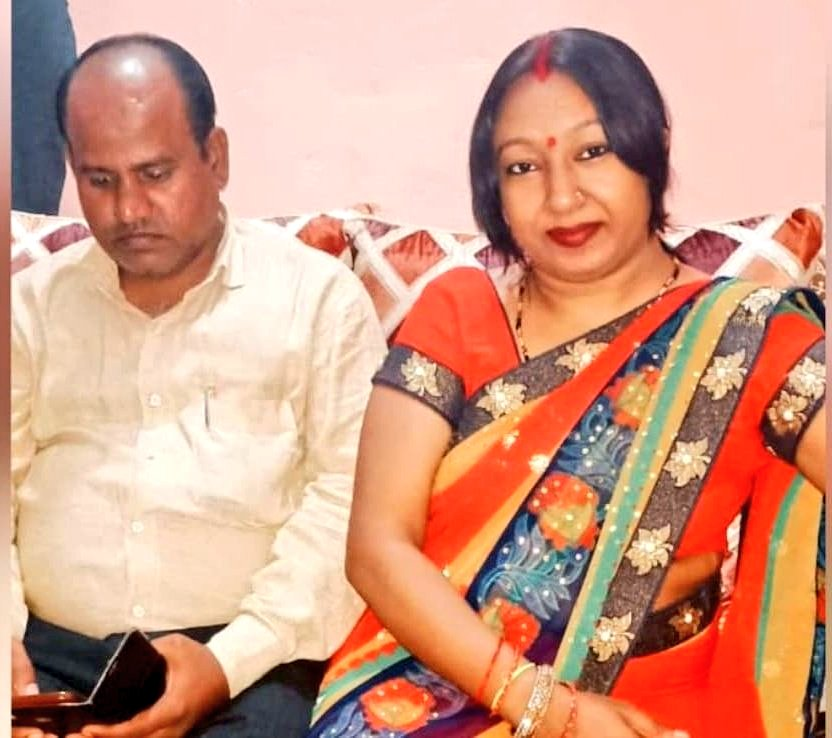
The court of Judge Pradeep Kumar Mishra awarded capital punishment to Ram Bhavan, who was posted as a junior engineer in the irrigation department in Chitrakoot, and his wife Durgawati. The couple had earlier been convicted under provisions of the Protection of Children from Sexual Offences (POCSO) Act, the Information Technology Act, and other laws related to child sexual abuse material (CSAM).
Along with the death sentence, the court directed that a letter be sent to the district magistrate recommending compensation of ₹10 lakh for each victim. The recommendation aims to support the long-term rehabilitation of the children, many of whom are still coping with deep psychological trauma.
The case traces back to October 2020, when the Central Bureau of Investigation (CBI) received intelligence from Interpol about pornographic content involving minors being uploaded from India. The alert pointed to three mobile numbers allegedly used to create and circulate explicit videos of children aged between 7 and 18 years.
Investigators followed the digital trail and linked the activity to Ram Bhavan. Acting in coordination with Banda Police, the CBI arrested him on November 18, 2020. His wife Durgawati was taken into custody the following month on charges of influencing witnesses and pressuring victims’ families to compromise.
During searches at their residence, officials recovered eight mobile phones, a laptop, pen drives, sex toys, and ₹8 lakh in cash. One pen drive alone contained videos of 34 children and 679 photographs. The children were residents of Banda, Chitrakoot, and nearby districts.
The CBI’s Online Child Sexual Abuse and Exploitation (OCSAE) unit played a crucial role in tracking encrypted transactions and identifying the accused through digital footprints. Investigators later found evidence of sexual abuse involving at least 50 children. The material was transmitted through encrypted platforms, cloud networks, email, and the dark web to buyers in as many as 45 countries.
According to officials, Ram Bhavan lured children with gifts such as mobile phones, chocolates, and watches. He allegedly maintained links with foreign paedophile networks and systematically created and distributed explicit content for financial gain.
The investigation was extensive and highly technical. Forensic experts conducted voice sampling, medical examinations, and detailed analysis of seized digital devices. The crime scene was reconstructed with the accused to strengthen the case. A comprehensive charge sheet was filed in February 2021.
The prosecution presented 74 witnesses during the trial, while more than 50 child victims recorded their statements before the court. Investigators described the abuse as severe and prolonged. Several children suffered physical injuries, and many continue to struggle with psychological trauma.
Officials stated that the probe was conducted with sensitivity, ensuring counselling support and coordination with child protection authorities. Special care was taken in handling and preserving digital evidence to maintain its integrity.
While delivering the verdict, the judge observed that the scale, brutality, and international reach of the crime justified the maximum punishment under law. The court concluded that the systematic exploitation of vulnerable children and global dissemination of abuse material placed the case firmly in the “rarest of the rare” category.

The judgment is being seen as a strong message against child sexual exploitation and cyber-enabled crimes. Though no sentence can undo the suffering endured by the victims, the verdict underscores the judiciary’s firm stance in protecting children and ensuring that those who prey on innocence face the harshest consequences under the law.
Summary – Key Highlights:
A special POCSO court in Banda sentenced a junior engineer and his wife to death for sexually exploiting children and selling CSAM on the dark web. Over 50 victims were identified. The CBI tracked encrypted digital activity linked to international buyers in 45 countries. The court recommended ₹10 lakh compensation for each victim and termed the case “rarest of the rare.”
Frequently Asked Questions (FAQ)
Q1. What did the Banda POCSO court decide in this case?
The special POCSO court in Banda sentenced a junior engineer and his wife to death for sexually exploiting children and selling explicit content on the dark web. The court termed it a “rarest of the rare” case.
Q2. Under which laws were the accused convicted?
The couple was convicted under the Protection of Children from Sexual Offences (POCSO) Act, the Information Technology Act, and other laws related to child sexual abuse material (CSAM).
Q3. How many children were affected in this case?
Investigators found evidence of sexual abuse involving at least 50 children. More than 50 victims recorded statements during the trial.
Q4. How was the case uncovered?
The CBI received intelligence from Interpol in October 2020 about child sexual abuse material being uploaded from India. Digital tracking and forensic investigation led to the arrest of the accused.
Q5. What role did the CBI play in the investigation?
The CBI’s Online Child Sexual Abuse and Exploitation (OCSAE) unit tracked encrypted digital transactions, analyzed seized devices, and gathered forensic evidence to build a strong case in court.
Q6. What compensation has been ordered for the victims?
The court recommended ₹10 lakh compensation for each victim and directed that a letter be sent to the district magistrate to ensure financial support for rehabilitation.
Q7. Why did the court award the death penalty?
The court observed that the scale, brutality, and international circulation of the abuse material made it a “rarest of the rare” case, justifying the maximum punishment under law.
Q8. What was recovered during the investigation?
Investigators seized multiple mobile phones, a laptop, pen drives containing explicit material, sex toys, and ₹8 lakh in cash from the accused’s residence.