

Chandigarh — Former Union Minister and ex-MP Pawan Kumar Bansal has issued one of the sharpest objections yet to the now-withdrawn proposal to bring Chandigarh under Article 240, saying the move would have carried “far graver implications” than just appointing a Lieutenant Governor.
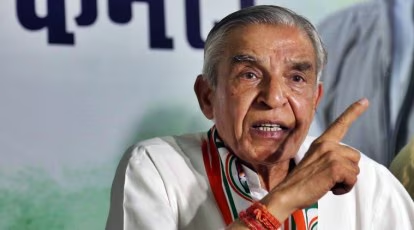
Speaking to The Chandigarh News, the senior Congress leader said the proposal was not a routine administrative change as projected but a shift that would have fundamentally altered Chandigarh’s constitutional status and governance structure.
Bansal explained that the Centre already enjoys full administrative control over Union Territories under Article 239. This includes the power to appoint an Administrator, even if the appointee is a Governor of a neighbouring state functioning independently of that state’s elected government.
“So calling this merely a change in designation or implying it’s only about appointing an LG is misleading,” Bansal said.
According to him, the real concern lies in the sweeping legal influence Article 240 would grant the Union Government. Under this provision, laws currently applicable to Chandigarh—including those passed by Parliament—could be amended or repealed through executive regulations without Parliamentary debate or approval.
“At present, only Parliament has the authority to legislate for Chandigarh,” he said. “If Article 240 applied, laws could be rewritten or diluted through a simple notification. That is the real danger.”
Bansal pointed out that several key statutes governing Chandigarh — such as the Capital of Punjab (Development and Regulation) Act, 1952, the Punjab Municipal Corporation Act and the Haryana Housing Board Act, 1971 — could have been modified at the executive level, bypassing the legislative process entirely.
“In effect, Chandigarh could end up governed by executive fiat — starting at the desk of a Section Officer and ending with a Joint Secretary in the Home Ministry,” he said, calling it a move that would leave Parliament “completely excluded” from the process.
He also warned that long-standing objections to amendments in Estate Rules, which currently require legislative scrutiny, could have been rendered irrelevant overnight.
Bansal said Chandigarh’s administrative model has functioned effectively for decades and does not require centralised executive control. Instead, he argued, the city needs genuine decentralisation — particularly a stronger municipal structure with real authority.
“What Chandigarh needs is a robust Mayor-in-Council system with adequate powers, funds and functionaries,” he said, adding that empowering local governance would serve the city far better than constitutional restructuring.