

Anandpur Sahib is witnessing an extraordinary transformation this week. Streets are illuminated, temporary structures are rising, and workers are racing against time — all in preparation for a historic moment and a deeply emotional one for many across Punjab and beyond.
The sacred city, founded by Guru Tegh Bahadur himself, is set to host a special session of the Punjab Legislative Assembly on November 24 at 1 pm. Governor Gulab Chand Kataria formally issued the notification, invoking Clause (1) of Article 174 of the Constitution to call the House at the Bhai Jaita Ji Memorial instead of its usual seat in Chandigarh. The decision aligns with the state’s ongoing observances marking the 350th martyrdom anniversary of the Ninth Sikh Guru.
For locals, the shift is more than symbolic — it feels personal. The quiet lanes of Anandpur Sahib have turned into a vibrant corridor of devotion and preparation. Workers can be seen installing seating arrangements, fine-tuning stage lighting, and laying carpets where legislators will soon take their places. The atmosphere resembles a grand religious and cultural fair, with the weight of history quietly running underneath.
Chief Minister Bhagwant Mann has been vocal about the scale and significance of the event. In a post on X, he invited devotees from across India and abroad, describing the gathering as a chance to reflect on Guru Tegh Bahadur’s profound sacrifice — one made in defense of religious freedom and human dignity. On Tuesday, CM Mann, along with AAP national convener Arvind Kejriwal, attended a Kirtan Darbar at Gurdwara Chatti Patshahi in Srinagar, signaling that the observance is meant to include communities far beyond Punjab’s borders.
ਨੌਵੇਂ ਪਾਤਸ਼ਾਹ ਸਾਹਿਬ ਸ੍ਰੀ ਗੁਰੂ ਤੇਗ ਬਹਾਦਰ ਜੀ ਦੇ 350ਵੇਂ ਸ਼ਹੀਦੀ ਦਿਹਾੜੇ ਨੂੰ ਸਮਰਪਿਤ ਸ੍ਰੀ ਅਨੰਦਪੁਰ ਸਾਹਿਬ ਵਿਖੇ 23 ਤੋਂ 25 ਨਵੰਬਰ ਤੱਕ ਕਰਵਾਏ ਜਾ ਰਹੇ ਸਮਾਗਮਾਂ 'ਚ ਪਹੁੰਚਣ ਲਈ ਮੈਂ ਦੇਸ਼ ਅਤੇ ਦੁਨੀਆ ਭਰ ਦੇ ਸ਼ਰਧਾਲੂਆਂ ਨੂੰ ਨਿਮਰਤਾ ਸਹਿਤ ਸੱਦਾ ਦਿੰਦਾ ਹਾਂ।
— Bhagwant Mann (@BhagwantMann) November 19, 2025
ਆਓ, ਗੁਰੂ ਸਾਹਿਬ ਜੀ ਦੀ ਲਾਸਾਨੀ ਸ਼ਹਾਦਤ ਅਤੇ ਸਿੱਖਿਆਵਾਂ ਤੋਂ… pic.twitter.com/EiLFa3LF75
Adding a spiritual dimension to the preparations, a jathha — including Kashmiri Pandits — began its pilgrimage toward Anandpur Sahib. Travelling through Jammu, Pathankot, Hoshiarpur, Dasuya, and Garhshankar, the group is expected to arrive by November 22. Three more jathhas from Amritsar Sahib, Tarn Taran Sahib, and Damdama Sahib are also on the move, expected to converge between November 22 and 23.
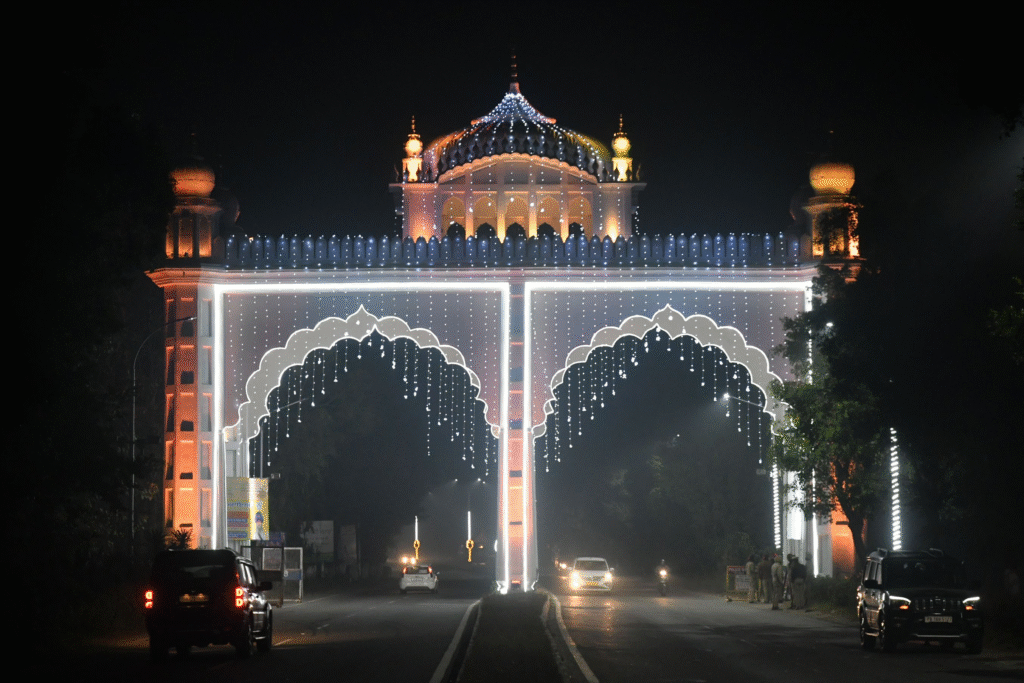
As evening falls, the real spectacle begins. The entry gate of Takht Sri Kesgarh Sahib bathes in golden light, drawing crowds who pause just long enough for a photograph before joining the flowing tide of visitors. Volunteers distribute tea, water, and prasad as devotees from varied backgrounds — many carrying Nishan Sahibs and some walking barefoot — enter the complex.
The coming days will bring a packed schedule: an all-faith convention, devotional events, a drone show, and a light-and-sound production narrating Guru Tegh Bahadur’s life and legacy. CM Mann has hinted that “historic decisions” may be announced during the assembly session, adding a layer of anticipation that is both political and emotional.
Guru Tegh Bahadur’s journey — from Amritsar in 1621 to his martyrdom in Delhi — remains one of the most powerful chapters in Sikh tradition. His founding of Anandpur Sahib more than three centuries ago makes the city not just an architectural or religious site, but a living memorial.
The timing of this event also carries political undertones. Just days ago, AAP candidate Harmeet Singh Sandhu secured victory in the Tarn Taran Assembly bypoll with a margin of 12,091 votes. With leaders, devotees, community groups, and international Sikh bodies watching, eyes will now turn to how the Assembly session shapes discussions on heritage, governance, and identity.
For now, the city waits — glowing softly under decorative lights, humming with traffic and hymns, and wrapped in an atmosphere where governance and devotion are preparing to share the same stage.